

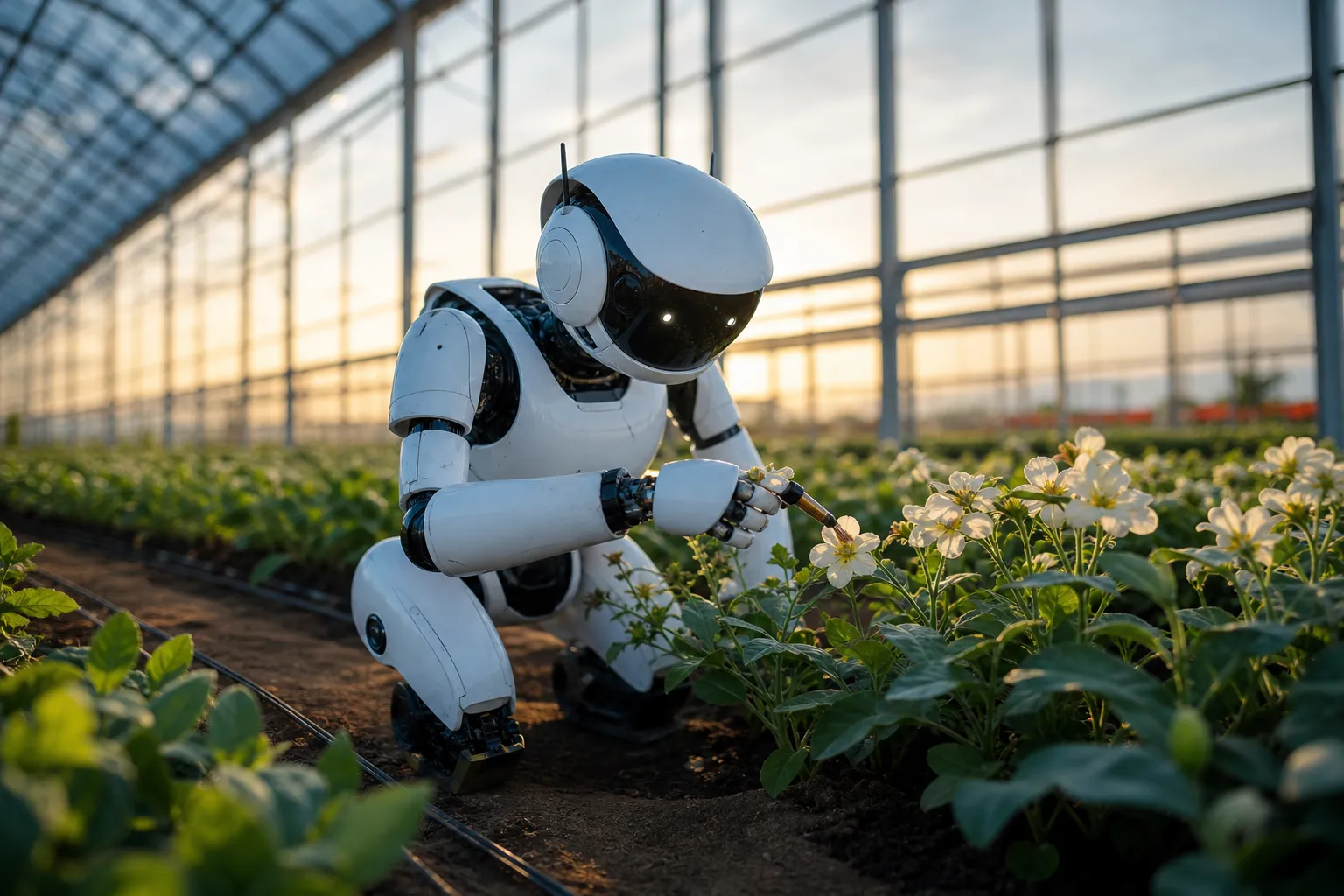
Biobest has started selling Polly, a pollination robot for greenhouse tomato crops. Developed with Arugga AI Farming, it complements the work of bumblebees and delivered yield gains of 2 to 6% in trials reported by the company.
Polly reaches the market after five years of collaboration between Biobest and Arugga AI Farming. The technology was developed, refined and tested in commercial greenhouses in Europe and North America. The robot is aimed at tomato growers who want to keep pollination consistent when weather conditions reduce bumblebee activity.
How Polly uses cameras and air jets to pollinate tomato flowers
Polly relies on the ability of tomato flowers to self-pollinate. Each flower has anthers containing the pollen and a female stigma. To promote fertilisation, the robot uses cameras and an image recognition system to identify individual flowers that are ready to be pollinated.
Once a flower is detected, Polly sends controlled pulses of air to release the pollen and encourage fruit set. This mechanical method allows growers to pollinate without relying solely on the activity of pollinating insects.
According to Jorden van de Walle, pollination product manager at Biobest, Polly is designed to work alongside bumblebees. It provides an extra safeguard when environmental conditions limit their activity, and it can also be used in tomato production systems without bumblebees.
An autonomous robot that can cover one hectare
Biobest reports two major improvements made before Polly’s commercial launch. The first concerns its operating speed, which the company says is now high enough for a single robot to cover one hectare of crops.
The second is a fully autonomous base. The grower simply places Polly in the first crop row at the start of the day. The robot then carries out pollination throughout the day with no further intervention, according to Biobest.
This setup is intended to reduce daily handling in commercial greenhouses while ensuring the robot moves through the tomato plants.
Yield gains of 2 to 6% reported in trials
According to Jorden van de Walle, trials using Arugga’s pollination technology have consistently shown yield improvements of between 2 and 6%. He adds that, in most cases, an increase of just 1.5% is enough to achieve a positive return on investment.
Biobest presents these results as an economic argument for greenhouse tomato growers. They reflect the performance reported during the trials, not a guaranteed yield for every farm.
The robot is particularly relevant during periods when bumblebees become less active. In winter, short days, low light, supplementary LED lighting and the thermal screens used to save energy can reduce their pollination efficiency.
In summer, Biobest also points to the difficulties that arise when temperatures exceed 35 °C. Polly can continue pollinating during these periods, limiting variations in flower fertilisation and their effect on production.
How to rent or buy Polly from Biobest
Polly is now commercially available from Biobest, with two options for tomato greenhouse operators.
- 12-month rental: the contract includes a full warranty, maintenance, technical support and replacement parts.
- Outright purchase: the robot comes with a full five-year warranty. When it expires, the grower can extend the coverage or opt for a remote support plan.
These two options let growers choose between a rental contract with maintenance included and an investment in their own pollination equipment.