

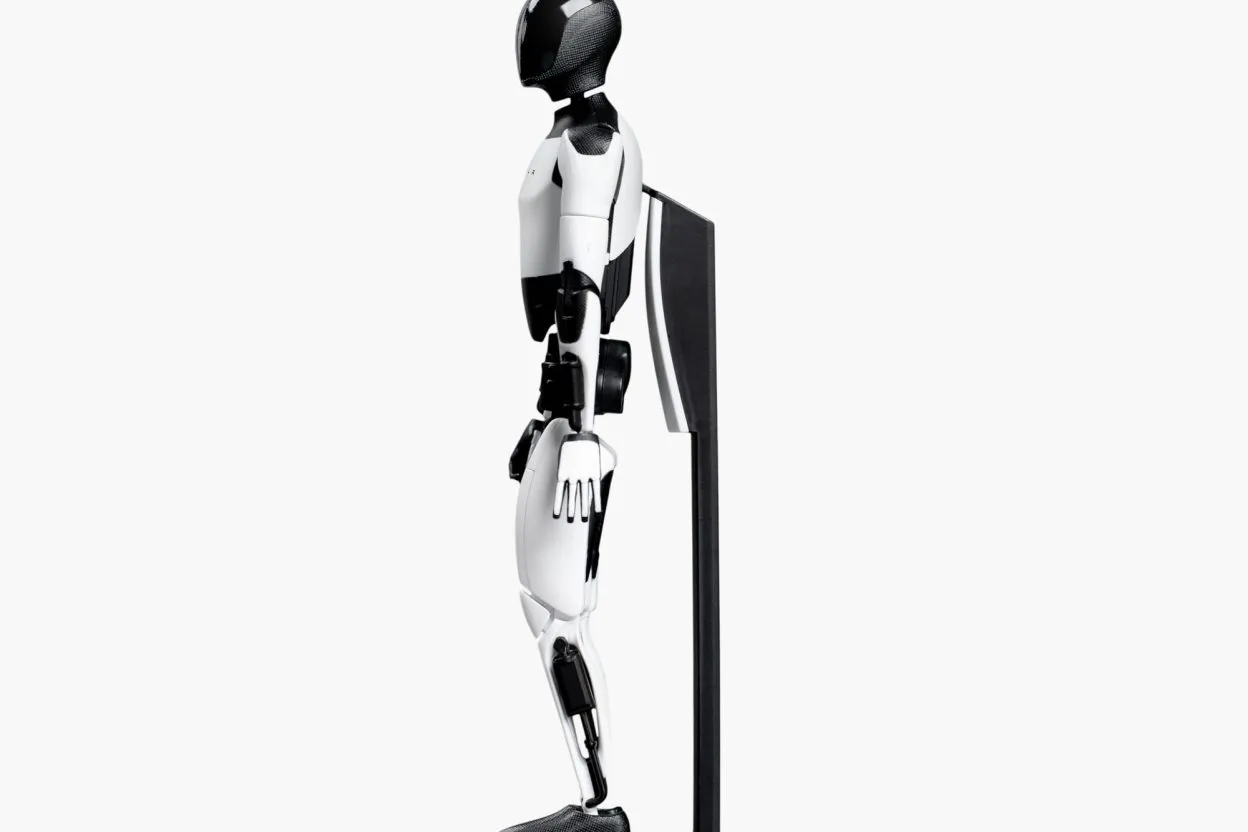
Tesla is considering using its Optimus humanoid robot to plug Cybercabs into charging stations. Lars Moravy, Tesla’s vice president of vehicle engineering, raised the possibility during a technical discussion about the autonomous vehicle. It is a possible application, not one presented as operational yet.
During a discussion hosted by Munro Live on the engineering of the Cybercab, Lars Moravy explained why Tesla is keeping a charging port on its autonomous vehicle. This choice means existing infrastructure can still be used during the transition to more automated charging solutions. Asked about this shift, he added: “Hopefully Optimus can help us with that soon.”
How Optimus could plug in Cybercabs during the move to automated charging
The role being considered for Tesla Optimus is a physical one: connecting a vehicle to a charging station. This task is separate from autonomous driving, which does not directly handle every operation needed to run a fleet.
The humanoid robot could therefore act as an intermediary between Cybercabs and charging equipment that is already installed. This use fits the purpose of a humanoid able to interact with infrastructure designed for humans.
Lars Moravy’s suggestion comes during a period of transition. Tesla is working on more advanced automation of its charging infrastructure, while the Cybercab keeps a connection compatible with existing installations.
Using Optimus to plug in Cybercabs remains a possibility mentioned by Tesla, not a function that has been demonstrated or deployed in a fleet.
Optimus battery capacity: 2.5 to 3 kWh mentioned
The technical discussion also gave an indication of the humanoid robot’s battery. Around the 34-minute mark of the video, Robbie, a battery engineer at Tesla, described the Optimus battery as a single module.
He mentioned an approximate capacity of between 2.5 and 3 kWh, without linking this estimate to a specific generation of the robot. He also said the battery was not the largest cost item in Optimus.
These figures were given verbally during the technical discussion. They do not amount to a measurement of the robot’s battery life.
Tesla says Optimus production has started in Fremont
On the manufacturing side, Tesla recently stated, as part of its third-quarter earnings communication, that Optimus production had started on its high-volume production lines in Fremont.
This manufacturing announcement is separate from the application being considered for Cybercab charging. The start of production does not confirm that Optimus will be deployed alongside autonomous vehicles.
The conversation hosted by Munro Live also covered vehicle maintenance and delivery. The host described a broader scenario combining autonomous trucks, vehicles and robots for meal delivery. This idea is speculation voiced during the interview, not a deployment programme announced by Tesla.