

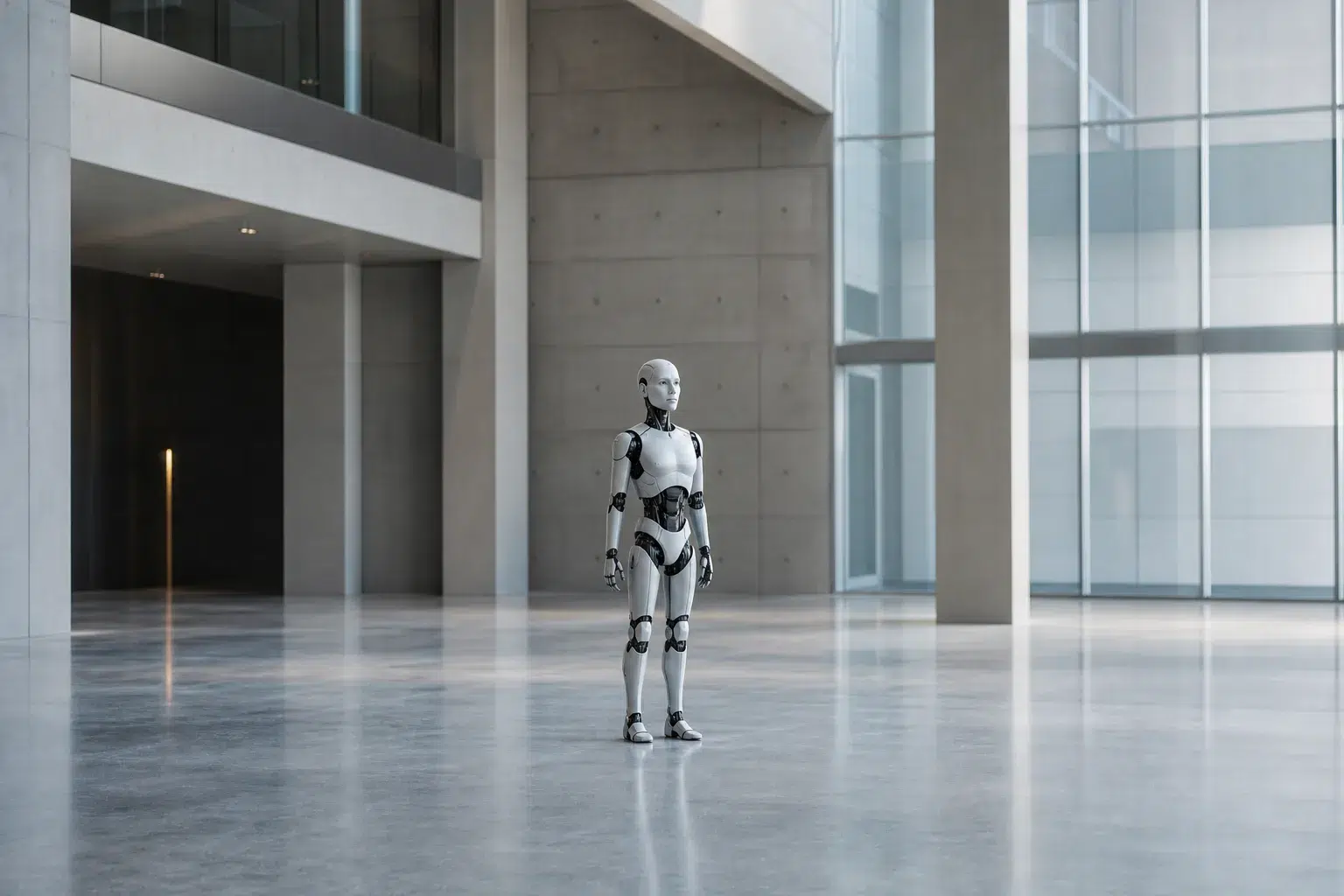
Natural facial expressions, blinking eyes, head movements and fluid conversations: biomimetic humanoid robots are trying to reproduce human behaviour. Several applications are envisaged, notably in healthcare, industry and services.
Progress in biomimetic robotics shows in the way these machines reproduce gestures and facial expressions. The robots described combine an outer texture modelled on living skin with facial micro-expressions and conversational interaction. These features are meant to make exchanges between humans and machines feel more natural.
How biomimetic robots mimic human facial and body movements
The capabilities described include several observable behaviours: raising a hand, blinking, turning the head and reproducing facial micro-expressions. The biomimetic texture also brings their appearance closer to that of a person.
Conversational interaction is another part of this approach. It is presented as fluid and accompanied by body and facial movements, so that the robot’s behaviour comes closer to human exchanges.
UBTECH: the Chinese company specialising in humanoid robots
The development of this field is linked in particular to the work of UBTECH Robotics Corp Ltd., a company founded in 2012 in Shenzhen, China, according to data from Tianyancha.
UBTECH focuses on research, on developing the technologies needed for humanoid robots and on their commercial applications. The company works on several aspects of this type of robotics, from core technologies to their use in professional environments.
In December 2023, UBTECH listed on the Main Board of the Hong Kong Stock Exchange. The listing led to it being presented as the first publicly traded company specialising in humanoid robots.
Where biomimetic humanoid robots could be used: healthcare, industry and services
According to the industry professionals cited, biomimetic robots are gradually moving from laboratory research towards specialised applications. Several fields are identified:
- Medical rehabilitation: use of robotic systems in rehabilitation activities.
- Industrial inspection: deployment of robots in professional environments that require inspection work.
- Home services: development of robotic applications for domestic settings.
- Special operations: possible use in specialised missions.
These sectors represent potential uses, not confirmed commercial deployments of any particular model.
How AI and lightweight materials aim to improve human-robot interaction
Industry professionals also point to the combination of biomimetic structures, large artificial intelligence models and lightweight materials.
This combination of technologies aims to improve robots’ ability to adapt to complex environments. Lightweight materials and structures inspired by living organisms are also being considered as a way to make interaction and collaboration between humans and robots safer.