

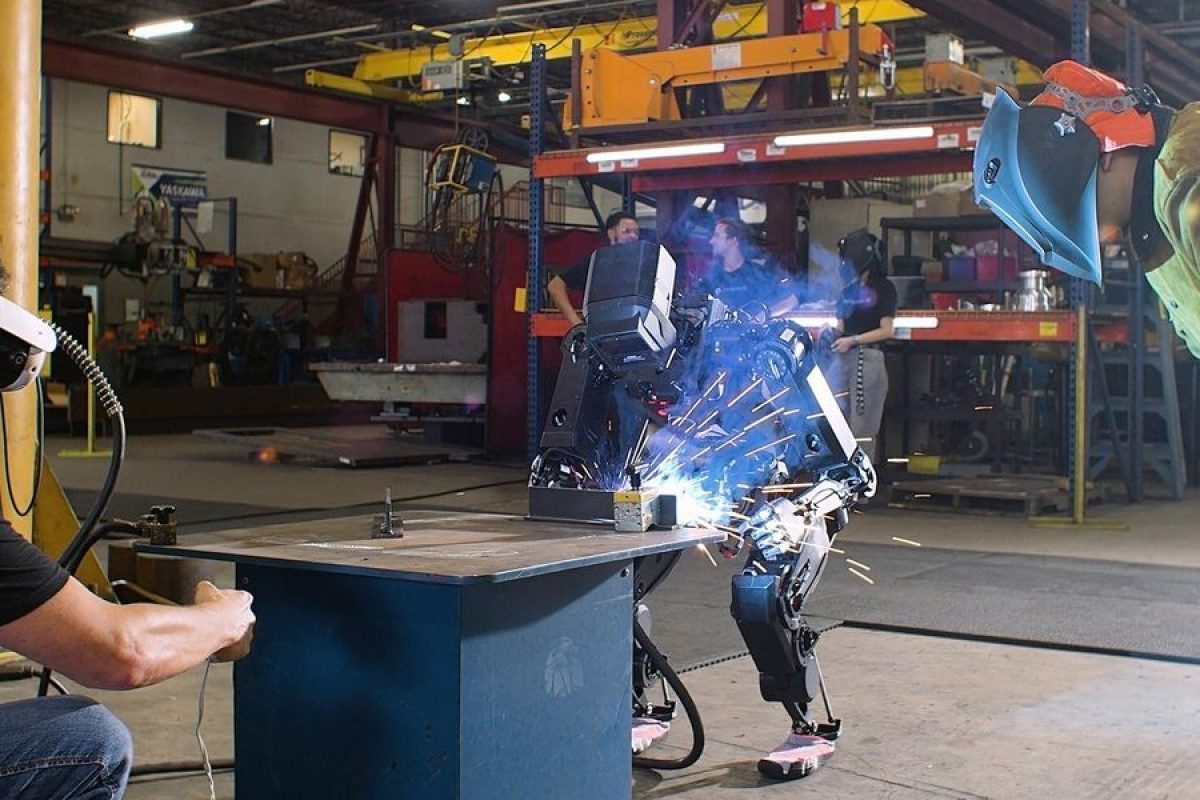
Persona AI is developing a bipedal humanoid robot designed for welding in shipyards. The US company is working with HD Hyundai and POSCO in South Korea and is focusing on linear welds, a repetitive industrial task that requires skilled labour.
Founded by Nicolaus Radford, former head of NASA’s Valkyrie programme, and Jerry Pratt, former chief technology officer at Figure, Persona AI is now concentrating on skilled industrial trades. Its first goal is to turn a humanoid prototype that can handle tools into a machine that can be used in shipbuilding, rather than immediately developing a general-purpose home robot.
How Persona AI’s humanoid prototype is learning to weld with standard tools
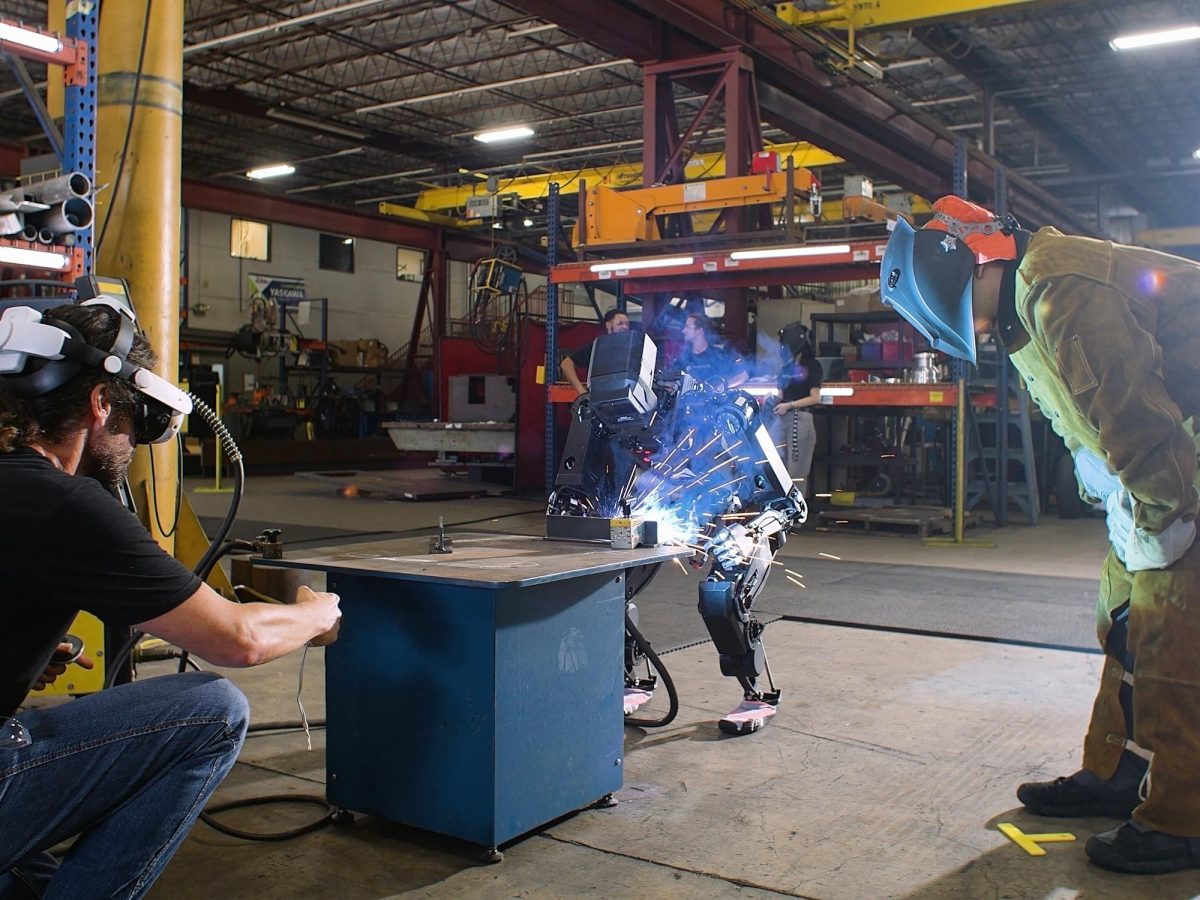
Persona AI’s robot is currently presented as a prototype that is learning to weld. The company shows a humanoid machine working in an industrial setting, but its aim goes beyond a one-off demonstration: it wants to develop a system that can carry out repetitive welding operations in shipyards.
AP spots no foreign exhibitors at the World Robot Conference in Beijing
The idea is to use the same handheld tools as human workers. This approach requires the robot to master handling the equipment, positioning it and keeping its movements consistent.
Jerry Pratt, co-founder of Persona AI, points out that using tools designed for humans adds a further technical challenge. To limit this complexity, the company is starting with long, straight welds rather than the most difficult joints.
Nicolaus Radford explains that these operations account for hundreds of kilometres of weld seams per ship, based on the shipyard requirements cited by Persona AI.
Welding speed and precision: millimetre-scale movements for consistent seams

Around 13,000 humanoid robots have been produced so far, Nicolas Halftermeyer estimates
Persona AI has chosen an application in which repetitive, precise movements make up a large part of the work. According to the company’s technical explanations, the progress of a weld is limited by how fast the metal melts.
For the linear operations it is targeting, Persona AI cites a maximum speed of around 1 centimetre per second. The quality of the seam depends in particular on movements repeated at the millimetre scale.
This combination matches capabilities sought in industrial robotics: repeatable trajectories, consistent motion and the ability to sustain a movement over long periods.
Jerry Pratt believes his humanoid could soon match the performance of human welders on these relatively simple operations, and eventually surpass it. This is a goal announced by Persona AI, not a measured industrial performance.
Why Persona AI chose a bipedal robot for shipyard work
The choice of a bipedal design responds to the physical constraints of shipbuilding. Unlike a workshop with fixed workstations, a shipyard is full of metal structures, narrow passages and obstacles that make moving around difficult.
According to Nicolaus Radford, open-air shipyards can stretch over several hundred metres. Workers regularly have to step over horizontal or vertical structural elements and work at ground level, overhead or through openings in the hulls.
Persona AI studied several configurations, including robots with four legs or more. The company ultimately settled on two-legged locomotion, which it considers the solution requiring the fewest changes to the way shipyards are currently organised.
This design should allow the robot to reach work areas using the routes intended for human operators. It also introduces stability and safety constraints, particularly when other workers and industrial equipment are nearby.
Persona AI partnerships with HD Hyundai and POSCO
Persona AI has announced two public partnerships in South Korea: one with HD Hyundai, a major shipbuilder, and the other with POSCO, a steel production group.
These collaborations place the robot’s development in industrial environments directly involved in metalworking. However, they do not amount to an announcement that welding robots will be sold or delivered.
Nicolaus Radford says Persona AI is looking for customers that could eventually host hundreds of robots on a single site. This scale reflects the company’s industrial ambition, not the number of machines currently deployed.
The commercial strategy is built on the need for skilled labour. According to Radford, Persona AI’s partners have large order books, but their production capacity is constrained by the available workforce.
The aim is therefore to increase the number of ships that can be built, rather than presenting the robot solely as a way to cut labour costs. Radford believes a machine could still make economic sense even if it cost more to run than a worker, as long as it increased output.
Beyond welding: Persona AI plans grinding and painting tasks
Welding is the first industrial skill Persona AI is targeting, but the company plans to gradually extend its humanoid’s capabilities to other tool-based operations.
Jerry Pratt mentions grinding, painting and other fabrication work in particular. These activities share common ground with welding, including handling equipment, following trajectories and working on metal structures.
To develop these skills, Persona AI plans to collect tens of thousands of hours of demonstrations performed by professionals, build high-fidelity simulations and run real-world trials.
These steps are meant to feed the robot’s learning and prepare it for a wider range of industrial tasks. The project thus remains centred on a prototype in development, with a first practical application in shipyard welding and established industrial partnerships in South Korea.