

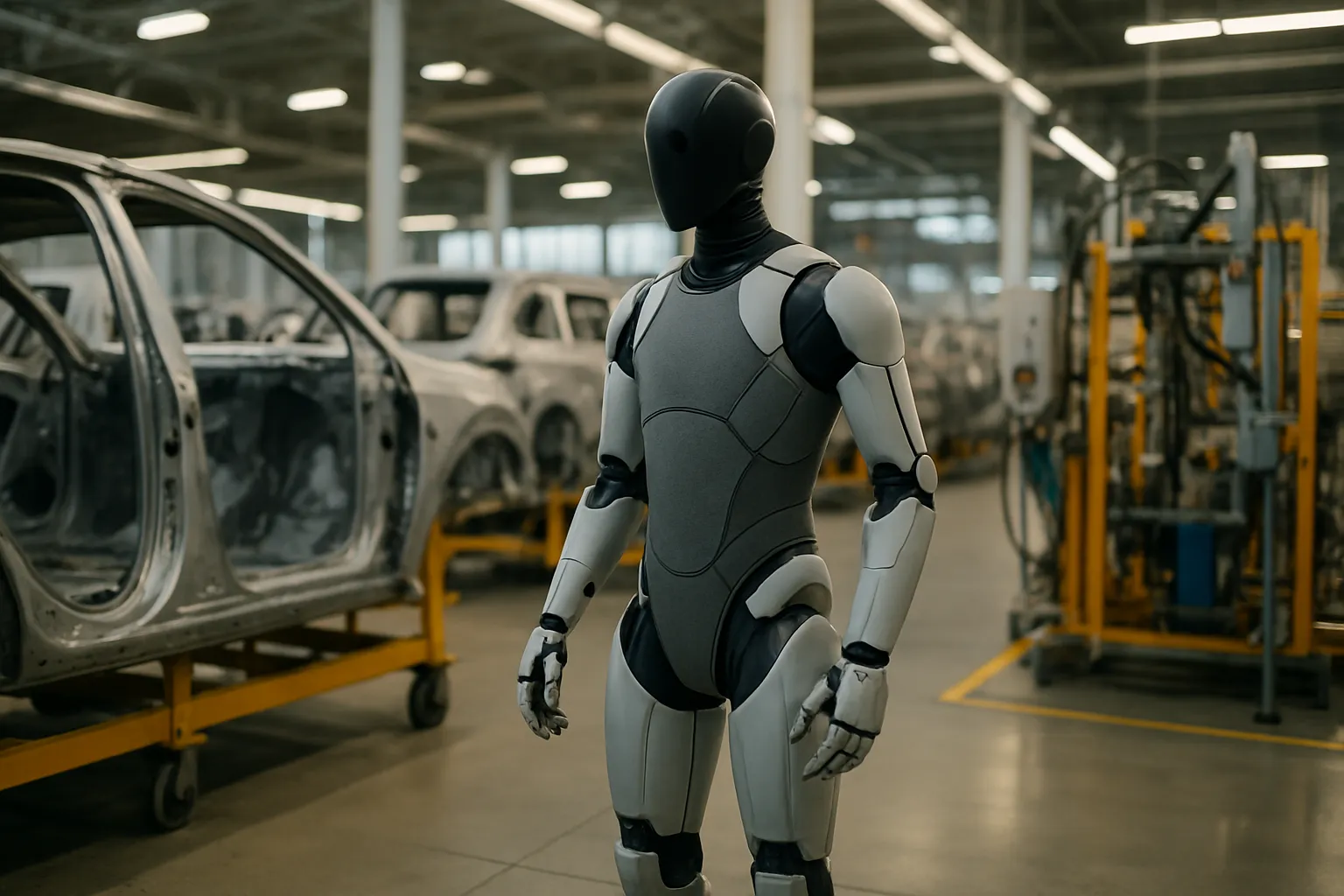
BMW is moving to the next version of Figure AI’s humanoid robot. At its US plant in Spartanburg, South Carolina, the carmaker is now assigning Figure 03 robots to logistics, according to BMW. They replace the Figure 02 units used in 2025 in a body shop pilot project.
The Figure 03’s job is parts sequencing. The robot sorts components that arrive loose in large bins and places them on a sequencing trolley. The trolley then goes to a collection point, where an automated logistics train or a transport robot takes it to the workers who handle assembly on the line. BMW describes the work as monotonous, something to take off employees’ hands, and as a common use case in car production with, according to the carmaker, “potential for development and scaling”.
Figure 03 vs Figure 02: what has changed
The Figure 03 weighs 61 kg and stands 1.73 m tall. Figure AI has added soft components to the body: part of the head, the torso, the arms and the legs are covered in a soft textile. The stated aim is to make collaboration with humans safer by limiting injuries in the event of a collision.
The robot now charges wirelessly, which should increase its availability. Stated battery life is around five hours of continuous operation on a single charge. The hands have been substantially redesigned: Figure AI has built tactile sensors and palm cameras into them so the robot can carry out tasks more precisely. According to Brett Adcock, founder and CEO of Figure AI, this improves the robot’s dexterity. Audio features also allow voice communication with the machine.
What BMW’s 2025 Figure 02 pilot showed
BMW had already deployed the Figure 02 in 2025. Over a ten-month period, the robot helped produce more than 30,000 BMW X3s by positioning body parts for welding, a task that demands both strength and precision. According to BMW, the pilot showed that humanoid robots can be used safely in real production conditions and deliver precise work there.
The Figure 03 deployment is part of the digital transformation of the Spartanburg site. Hall 52 has been extended and refitted to produce powertrain variants of the X3 and the upcoming all-electric BMW iX5.
Further reading: Figure 03: specifications, battery life and use at BMW · Figure AI: humanoid robots, Helix AI and the BotQ factory