

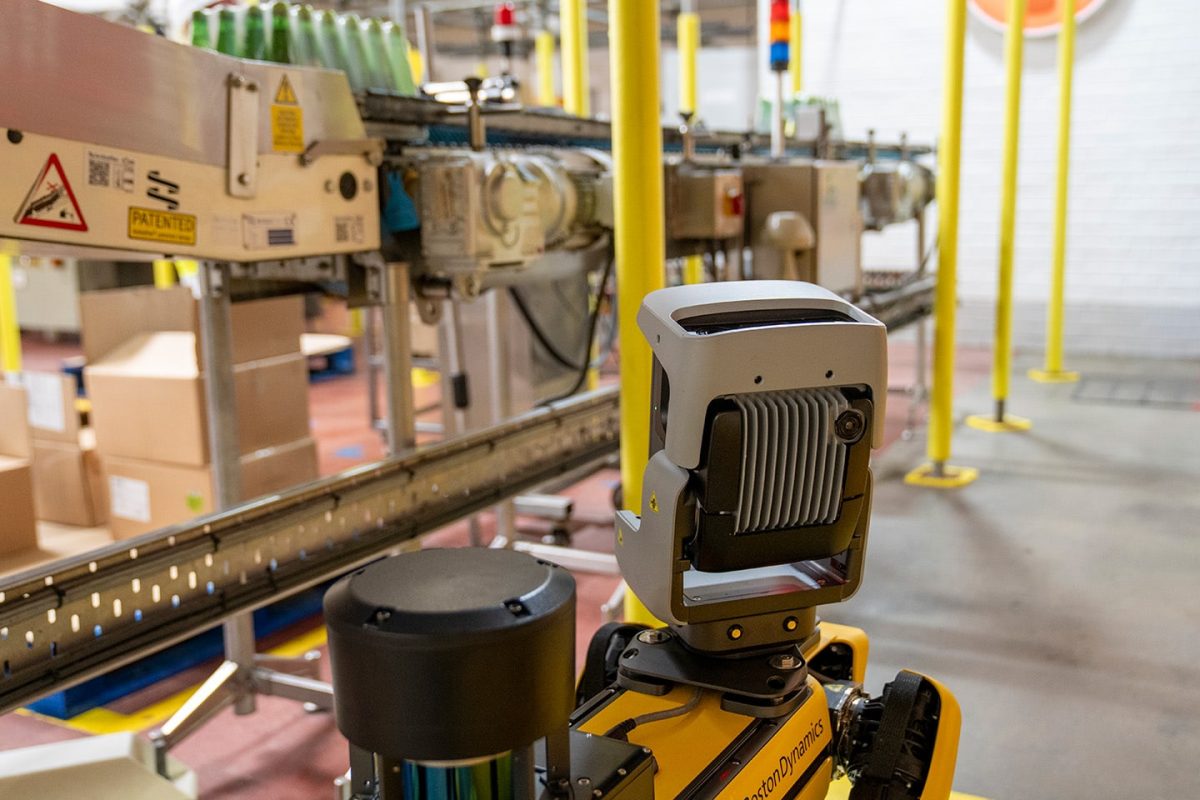
Boston Dynamics has unveiled Spot 5.2, an update to its industrial quadruped robot that combines Google Gemini, video inspections and monitoring of new types of risk. The Orbit platform is also evolving to link equipment alerts to the robot’s missions.
With this release, Boston Dynamics aims to integrate Spot more closely with the monitoring and maintenance systems that factories already use. The US manufacturer is expanding the inspection capabilities of its commercially available robot and upgrading its Orbit software to centralize industrial data. The stated goal is to let maintenance teams trigger robotic interventions based on information coming from several systems.
Spot 5.2 uses Google Gemini to analyze inspection images and video
The new version of Spot extends the use of Google Gemini in Orbit AIVI, Boston Dynamics’ visual intelligence system. According to the manufacturer, the model is trained on industrial data to recognize specific situations, particularly when inspecting gauges, indicator lights, pallets, liquid levels and 5S organization boards.
The update also covers video inspections, available with AIVI-Learning. Until now, these inspections focused on one-off visual observations. They can now use video sequences to identify anomalies that are hard to detect in a still image.
Instadrone adapts Chinese Unitree G1 humanoid robot for rescue and inspection missions in Béziers
Boston Dynamics highlights several industrial applications:
- Spotting water drips from pumps or motors that could cause puddles or corrosion.
- Identifying conveyor belt slippage that could lead to production stoppages.
- Monitoring indicator lights that signal an equipment malfunction.
Boston Dynamics presents these features as new software inspection capabilities. The examples illustrate the situations the system is designed to detect, not success rates measured in real-world operation.
Site Scans: how Spot 5.2 monitors hazards across a facility
Around 13,000 humanoid robots have been produced so far, Nicolas Halftermeyer estimates
Boston Dynamics is also introducing a feature called Site Scans. It uses AIVI-Learning to analyze Site View 360° images and look for temporary hazards in an industrial environment.
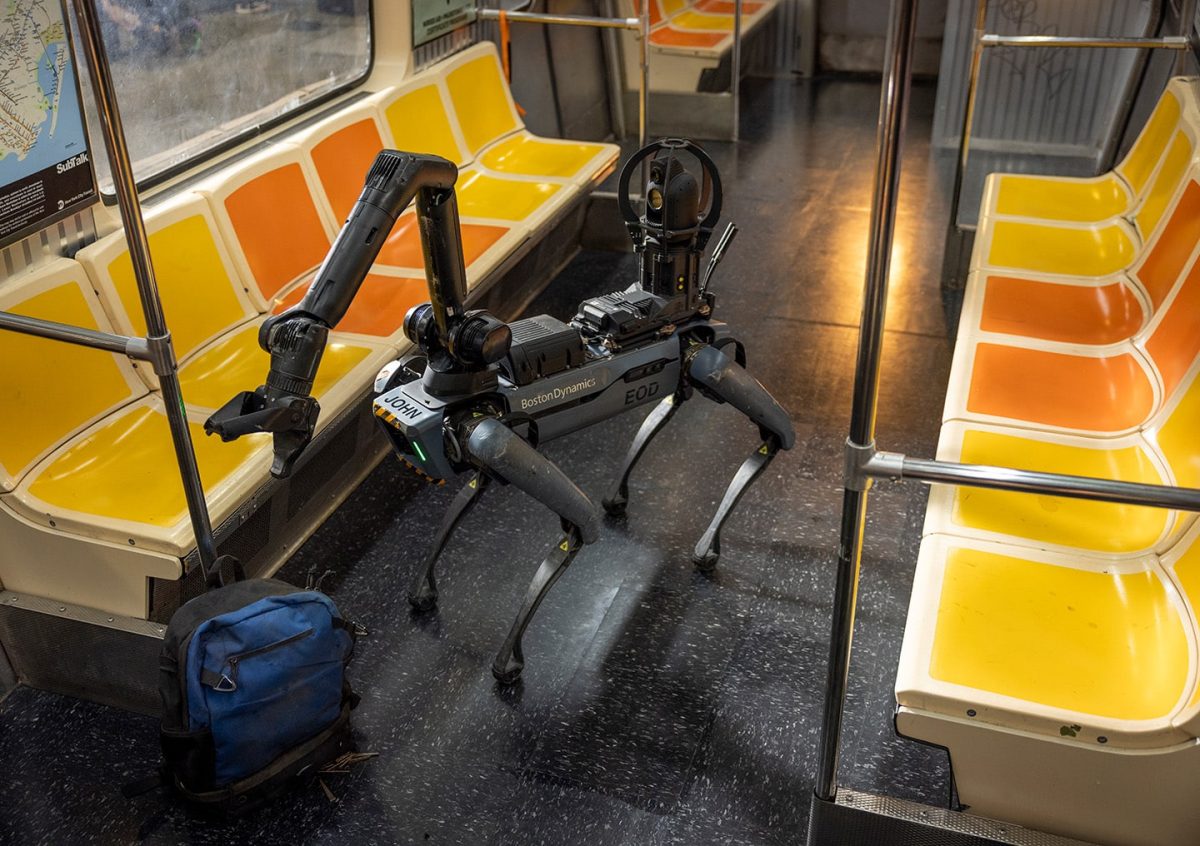
The system can, for example, look for a liquid spill, a person in a restricted area or a suspicious bag.
Unlike inspections tied to a specific machine, Site Scans monitors situations that can arise anywhere in a facility. According to Boston Dynamics, monitoring covers the entire site by default, while users can select specific areas and time slots.
Gas detection, vibration analysis and partial discharge detection for predictive maintenance
Version 5.2 introduces three new predictive maintenance capabilities: gas detection, visual vibration analysis and partial discharge detection.
Through the integration of the MFE Spot Connected Gas Detection solution, Boston Dynamics says Spot can autonomously monitor more than 20 types of gas in real time during its regular missions. Atmospheric readings are sent directly to Orbit.
Visual vibration analysis works by amplifying movements too small to be seen directly with the naked eye. The technique makes it possible to examine the mechanical behavior of machines and look for signs of anomalies.
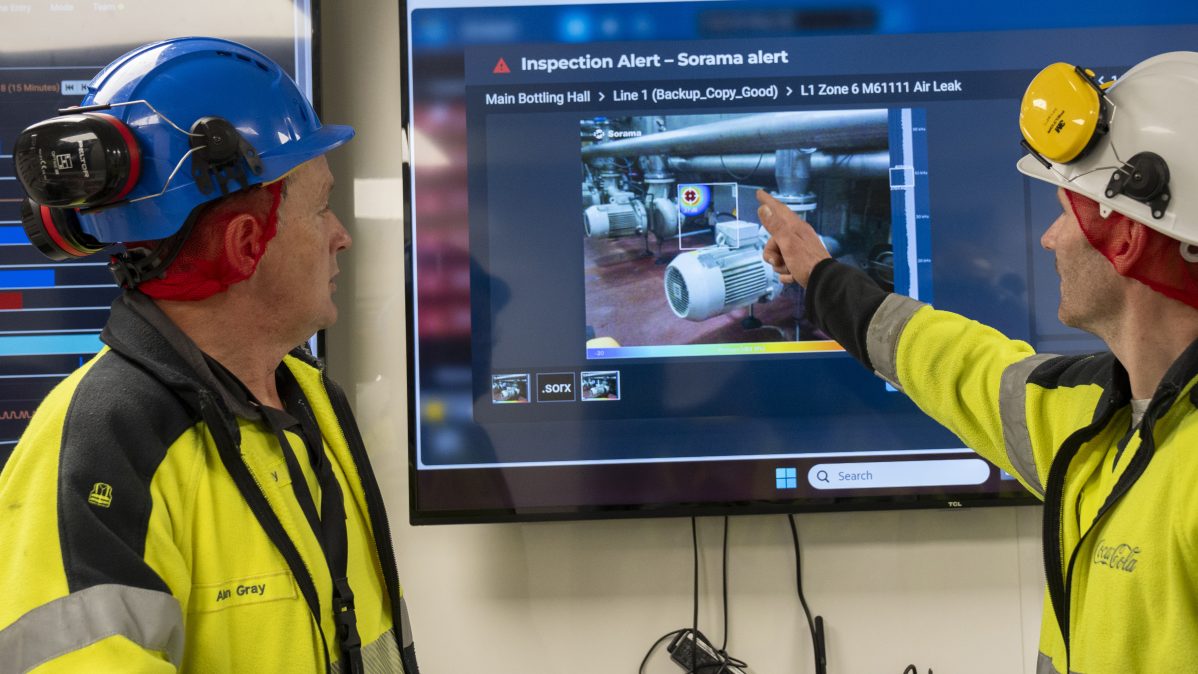
Partial discharge detection uses the Sorama L642. It targets high-voltage electrical equipment, including cables, bushings and transformers, to look for early signs of insulation degradation.
How Orbit links Spot inspections to factory equipment
The other major change concerns Orbit, Boston Dynamics’ platform for managing robots and inspection data.
With this update, Orbit organizes information around industrial equipment rather than solely around the inspections carried out. Companies can import their equipment hierarchies, attach metadata and link each machine to the relevant observations.
This metadata can include location, equipment type, criticality level, manufacturer and model.
The new dashboards allow a maintenance manager, for example, to view anomalies affecting all the pumps in a facility or only those in a given area. Filters also make it possible to route alerts to the relevant teams.
Boston Dynamics says this structure can be used on both new and existing Orbit deployments. It brings the platform closer to industrial management systems such as CMMS, MES and EAM.
AI agents will be able to trigger Spot missions from external alerts
Orbit’s new architecture also makes it easier to integrate data from external sensors, industrial PLCs or security cameras through its application programming interfaces.
Boston Dynamics presents this development as the foundation for a new MCP layer designed to connect artificial intelligence agents to the robot’s physical operations.
The manufacturer describes one scenario in which a fixed sensor detects an anomaly and Spot is dispatched to gather more information. Another application is to trigger an inspection only when a machine is running.
In security, a CCTV camera or third-party sensor could also send the robot to an area where movement has been detected.
These scenarios illustrate the automated workflows Boston Dynamics has in mind. Triggering them depends on business rules and on integrating the various industrial systems.
Spot 5.2 update: a software release for existing Spot robots
Spot 5.2 is a software update for the existing industrial quadruped robot, not a new hardware model. Boston Dynamics has published Spot 5.2.0 release notes alongside the announcement for users who want to update their system.
The new features cover onboard inspection capabilities, integrations with additional equipment and the use of information in Orbit. Some functions, such as video inspection, require AIVI-Learning, while the new gas and partial discharge measurements rely on specific hardware solutions.
For companies that already use Spot, the most tangible change is the ability to combine the robot’s data with data from fixed equipment, then view anomalies by machine or by area directly in Orbit.
See also: Boston Dynamics Spot: specs, Orbit and use cases · Boston Dynamics: Atlas, Spot, Stretch and Hyundai