

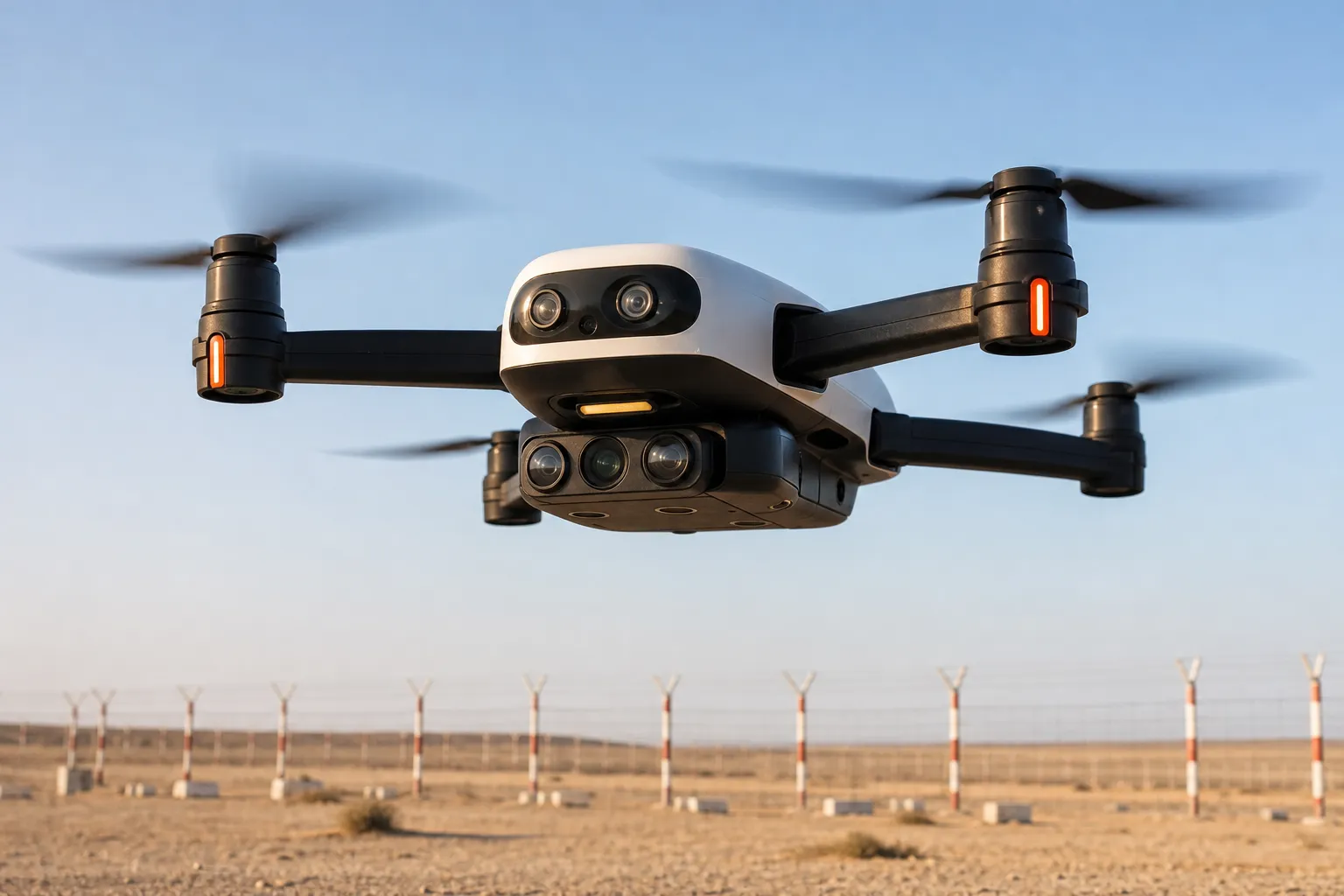
At the Milipol Qatar exhibition in Doha, a remote-controlled robot, drones and artificial intelligence systems were presented to support security and rescue operations, particularly in areas that are dangerous for responders.
Milipol Qatar brought together around 280 companies from 33 countries and featured several technologies aimed at security services and emergency response teams. The equipment on display covered a range of robotics applications, from aerial surveillance to searching for missing people. All of it shared one goal: limiting the exposure of human operators to dangerous situations.
A remote-controlled robot for security operations
The equipment on show included a remote-controlled robot. Its presence reflects the interest in remotely operated robotic systems for work in environments that pose risks to people.
Remote control keeps a human operator in charge of the robot. This approach fits into the discussions held at the exhibition on the role of human supervision in security operations that use automated technologies.
Drones for traffic control and searching for missing people
Drones also featured in the presentations. Among the devices on display was a drone fitted with traffic lights, an example of an aerial application for traffic management.
Companies also explained how aerial footage can help in search and rescue operations. Drone imagery can help teams locate missing people and gather information about the areas where they are operating.
A mobile command centre and uncrewed boats
The equipment presented was not limited to ground robots and drones. A minibus converted into a mobile command centre was also among the solutions on display.
Companies also explained how boats can carry out missions without a crew. These systems open up the possibility of remote operations in environments where a human presence can be dangerous.
How AI is used in security and rescue operations under human control
Discussions between exhibitors also covered the use of artificial intelligence in security and emergency operations. Topics included the role of human operators and the controls required when these systems are used.
The applications presented therefore serve two operational purposes: gathering information about incident sites and carrying out certain tasks in dangerous areas, while keeping human operators involved in how they are used.