

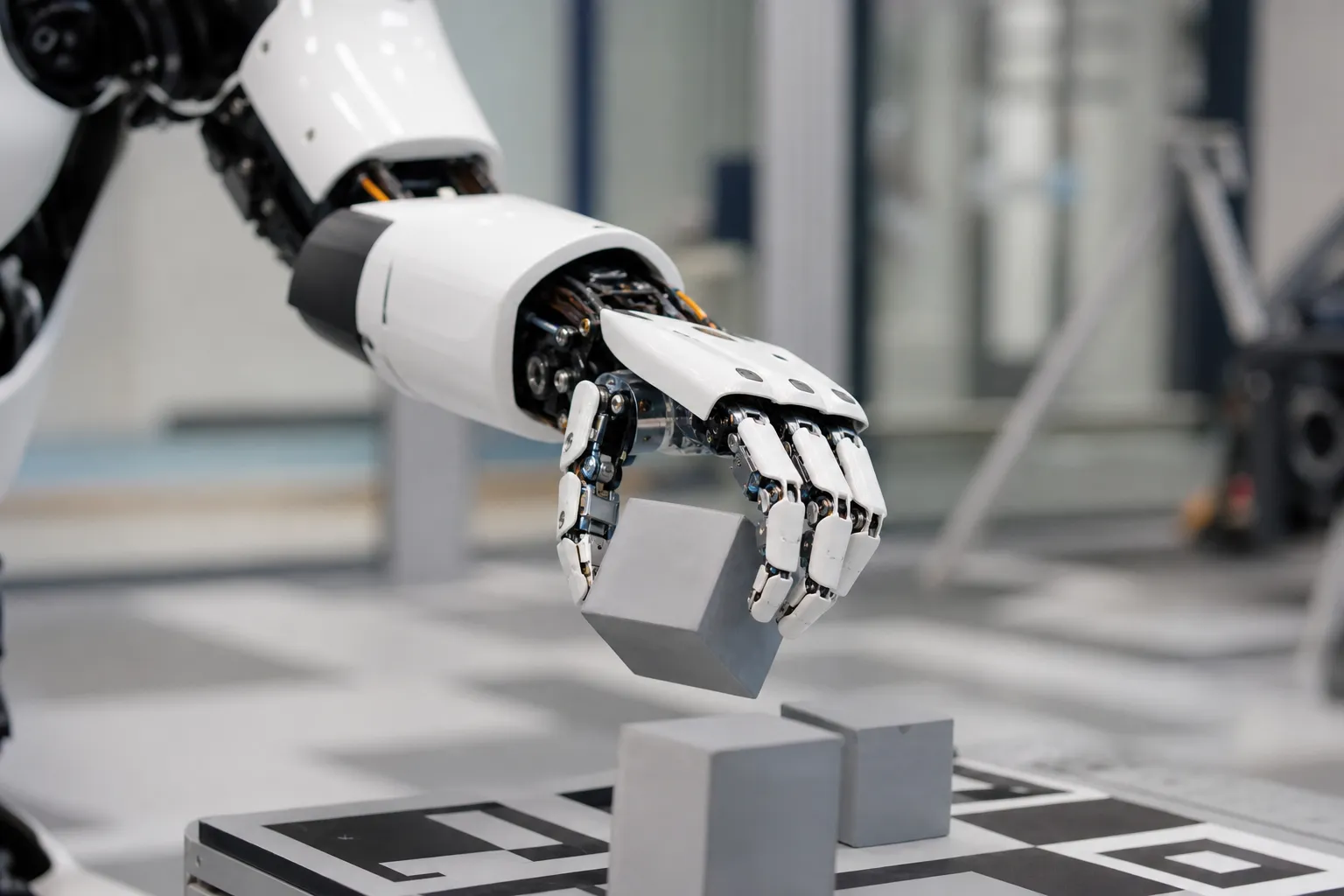
Vietnam’s 2026 National Robotics Innovation Contest brought together 612 teams and 1,064 participants. Its final, held in Ho Chi Minh City, included a category in which autonomous pre-programmed robots and remote-controlled robots worked on simulated missions.
On 1 November 2026, Tôn Đức Thắng University in Ho Chi Minh City hosted the closing and awards ceremony of the contest’s sixth edition. The event is organised by the Central Committee of the Ho Chi Minh City Communist Youth Union, together with the Centre for the Development of Young Science and Technology Talent. Its aim is to build students’ skills in programming, robotics and problem-solving.
Who reached the final: 276 teams in four categories
After national online qualifiers and regional selection rounds held in Nghệ An, Đồng Nai and Hưng Yên, 276 teams with 517 participants from 19 provinces and cities made it to the final.
Competitors were split into four categories: R1, R2, R3 and R4. The first three brought together teams selected in the regional qualifiers. In the R4 category, 12 teams with a total of 35 participants went straight to the final, in line with the rules announced by the organisers.
R1 to R3: programmed robots in a simulated space exploration setting
In the R1, R2 and R3 categories, participants had to steer their robots across a map representing a space exploration environment. The missions followed the theme Stellar Cruise, Intergalactic Voyage.
To complete the tasks within the time limit, teams had to draw on their programming knowledge, build a strategy and fine-tune how their machines worked. The exercises combined computing logic, precise control and problem-solving.
The runs took place in a simulated competition environment, with the robots used as tools for learning and experimentation.
R4: how an autonomous robot and a remote-controlled robot worked together
The R4 category set a different challenge, focused on building modern infrastructure. Each team had to use two robots with complementary roles on a scale model simulating construction and development work.
The first robot operated autonomously, following a pre-programmed sequence of tasks. The second was controlled directly by the participants. Success depended on coordination between the two machines and precise execution of each operation.
Teams competed over several rounds: qualifiers, quarter-finals, semi-finals and the final. The missions called for joint planning and solid control of the robots’ movements and actions.
A student from Nghệ An Ethnic Boarding High School No. 2, who won first prize in R4, described how hard the ring-shooting task carried out by the autonomous robot had been. Her team had to run repeated trials and adjustments to improve how the robot performed it.
Prizes: four first places and cash awards for winning teams
At the end of the competition, the organisers awarded 4 first prizes, 12 second prizes and 16 third prizes across categories R1 to R4.
Winning teams received certificates of merit from the Central Committee of the Youth Union, medals and cash prizes:
- First prize: VND 5 million.
- Second prize: VND 2 million.
- Third prize: VND 1 million.
A team ranking also recognised the provincial delegations. The Lâm Đồng Youth Union took first place, ahead of Đồng Nai in second and Nghệ An in third.
Why the contest exists: programming and STEM skills
Nguyễn Tường Lâm, secretary of the Central Committee of the Youth Union and head of the organising committee, placed the competition within the national goals for science and technology development set out in Resolution 57-NQ/TW of Vietnam’s Politburo.
For the organisers, learning to program early, technical creativity and problem-solving skills are key goals. The contest also encourages exchanges between schools, families, educational organisations and businesses.
A student from Bình Chiểu Secondary School in Ho Chi Minh City, who won a second prize in R2, was taking part in the competition for the second time. He pointed to the progress he had made in programming and the exchanges with other young robotics enthusiasts.
Beyond the prizes, this sixth edition gave students a chance to apply their science knowledge in hands-on challenges. It also promoted STEM teaching and robotics experimentation in Vietnamese schools.