

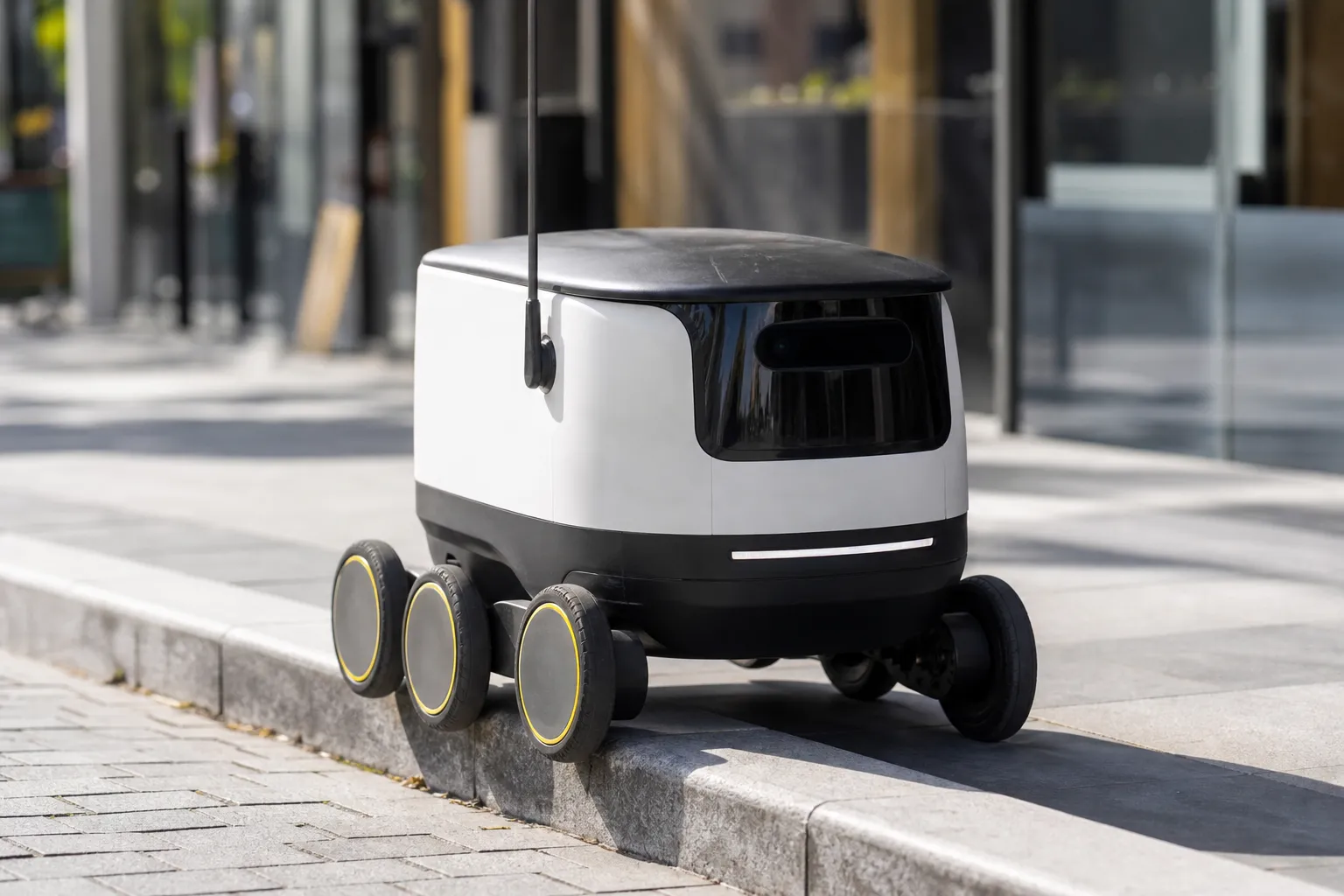
In Philadelphia, 78-year-old Carolyn Marvin was stopped by police after blocking an Uber Eats delivery robot on a sidewalk. Her action highlights a feature of Pennsylvania law: these machines have a legal status comparable to that of pedestrians.
Carolyn Marvin, a former communications professor at the University of Pennsylvania, was walking home after a flu shot when she came across an autonomous Uber Eats delivery robot. She stepped into its path and stayed there until a crowd gathered and police arrived. The obstruction was deliberate. The retiree says she has been carrying out similar actions for several months to protest against machines taking over public spaces.
Police called after the Uber Eats robot was blocked
According to a Philadelphia police spokesperson quoted by The Independent, officers were called following a report of possible damage involving a robot.
Carolyn Marvin reportedly refused several times to move despite officers’ instructions. She was eventually given a citation for disorderly conduct.
The retiree told CNN she believed she had more rights than the robot. Her encounter with police made her aware of a specific provision in local law covering autonomous delivery devices.
Pennsylvania law treats delivery robots as pedestrians
Pennsylvania’s Act 106 of 2020 classifies autonomous delivery robots, officially called “personal delivery devices”, as pedestrians under the state’s vehicle code.
This status gives them certain rights and imposes obligations comparable to those of pedestrians. In particular, drivers must yield to them at crosswalks. In return, the devices must themselves yield to pedestrians and cyclists.
The law therefore regulates how delivery robots move through public space, without giving them general priority over people using the sidewalks.
Blocking robots for 10 to 15 minutes in protest at robot deliveries
Carolyn Marvin told CNN she has been deliberately blocking these machines for several months, whenever circumstances allow. She estimates she usually holds them up for about 10 to 15 minutes.
She says she wants to draw attention to several possible consequences of deploying delivery robots: lost jobs for delivery workers, pedestrian safety, and privacy risks linked to the cameras fitted on the devices.
She also asserts her right to protest against corporate practices in public space, citing the First Amendment to the US Constitution.
For the former academic, sidewalks should remain spaces for people rather than machines. She draws a parallel with the space cars already occupy on the streets and criticises the gradual spread of technology into everyday life.
The retiree plans to keep blocking robots despite the police stop
The police intervention does not appear to have changed Carolyn Marvin’s stance. Asked by CNN whether she intended to keep blocking delivery robots, she said yes.
Her action still targets devices travelling on sidewalks, which she sees as a questionable occupation of public space by technology companies.