

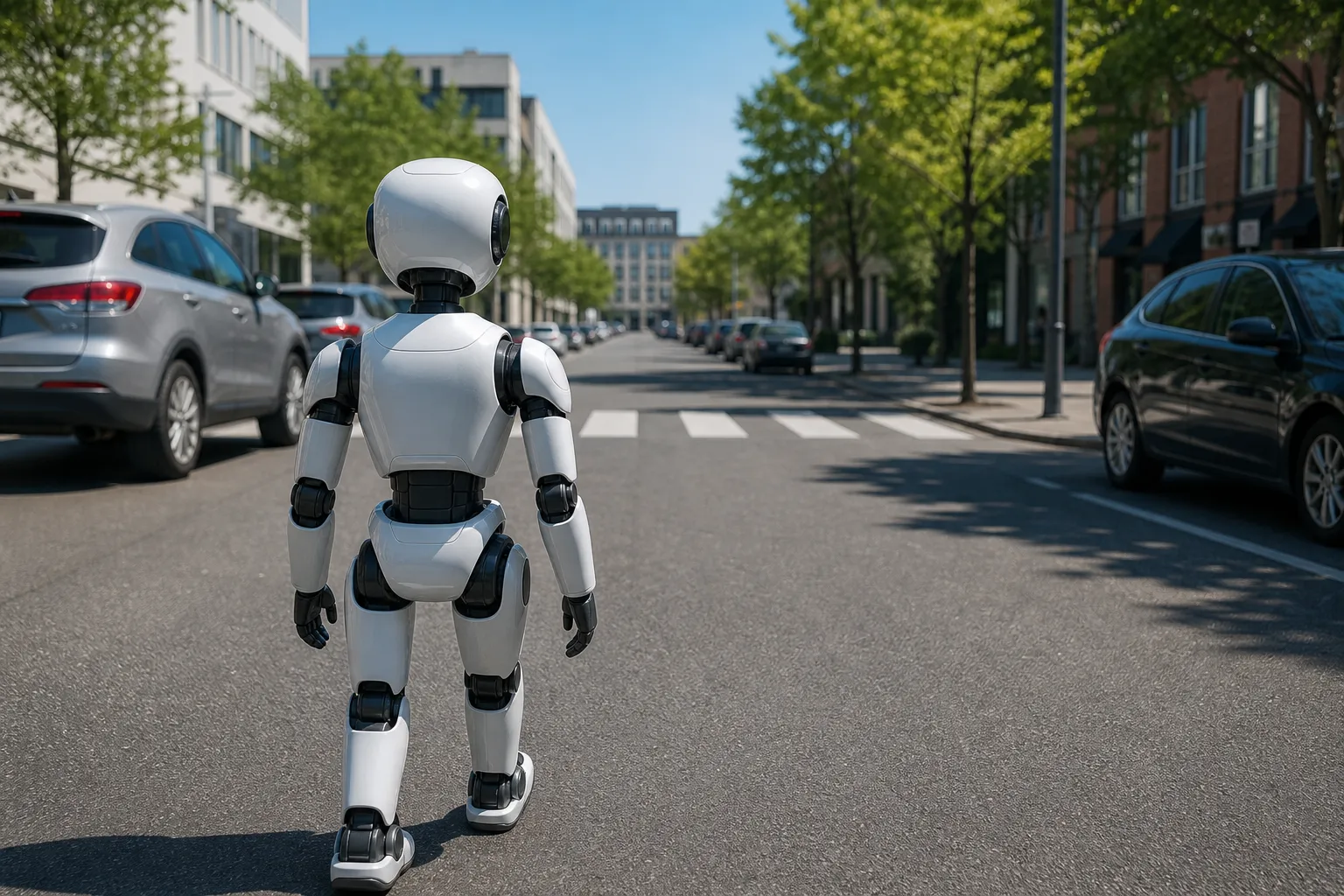
South Korea is preparing to relax its regulations to make commercial use of mobile robots easier in apartment buildings, construction sites, car parks and transport infrastructure. The government wants to tailor safety and operating rules to the conditions of each environment.
South Korea’s Ministry of Land, Infrastructure and Transport presented a regulatory streamlining programme for autonomous vehicles and mobile robots at the second plenary meeting of the presidential committee overseeing the reform. The aim is to let technologies tested in the field become commercial services by reducing administrative hurdles and setting appropriate operating conditions.
How the rules would let delivery robots operate in apartment buildings
One of the measures concerns delivery robots that can move both inside and outside residential buildings. The government wants to encourage services in which these machines carry goods within apartment buildings.
This requires adapting the rules on the use of building facilities and taking each building’s layout into account. Communication systems and safety procedures are also among the conditions to be examined before the robots can operate.
The planned scheme is intended to create a framework that allows operators to set up these services in residential spaces. It is a proposed regulatory change, not the announcement of a specific robot going on sale.
Construction sites, car parks and transport infrastructure also covered
The government programme covers several categories of mobile robots intended for professional use. The authorities want to make them easier to deploy in environments with differing technical and regulatory constraints.
- Construction sites: mobile robots for inspecting facilities and assisting workers.
- Car parks: robots designed for parking operations.
- Logistics sites: mobile robots used for handling and moving goods.
- Airports and rail facilities: spaces for which new conditions of use for mobile robots are being drawn up.
- Indoor and outdoor spaces: delivery robots able to move through different environments.
For these applications, the government plans sector-specific regulatory exceptions as well as operational standards that operators will be able to apply in the field.
In particular, the authorities want to take into account the layout of facilities, access rules, means of communication and safety management requirements. The goal is to match the conditions under which robots move to the real environment in which they are used.
What the reform means for moving from robot demos to commercial services
South Korea’s approach is part of a broader policy supporting physical artificial intelligence technologies, which include mobile robots and autonomous vehicles.
The government intends to reduce the constraints that force companies to file repeated authorisation requests in order to test their technologies. For mobile robots, this approach relies on sector-specific exceptions and on setting concrete operating rules.
The announced measures therefore concern the regulatory conditions for deployment and do not amount to the commercial launch of any robot model. They apply both to companies developing these machines and to operators that want to integrate them into their activities.
Faster permits for autonomous vehicles
In parallel, the ministry plans to reform the procedures that apply to driverless autonomous vehicles. Some exceptions granted for trials could be written permanently into the regulations, after consultation with the relevant authorities.
According to government estimates, this change would cut administrative procedures by at least 3 months for the companies concerned.
A fast-track temporary authorisation procedure is also planned for identical autonomous vehicles whose safety has already been verified. The government estimates that this measure could shorten procedures by at least 1 month.
From 2027, the authorities plan to support the deployment of at least 3,000 demonstration vehicles in pilot cities dedicated to autonomous driving. These trials are meant to gather more data in a range of traffic conditions and to evaluate perception, decision-making and control systems.
Safety rules for robotaxi services in South Korea
The reform also sets out to define the responsibilities of driverless vehicle operators. They will have to handle remote monitoring, cybersecurity and emergency management, with adequate human resources available to intervene.
The government is considering a first pilot of commercial robotaxi services in Gwangju, alongside consultations with transport professionals, including taxi operators.
On the industrial side, a performance certification system for business-to-business transactions is due to be introduced from the end of 2026, ahead of the adoption of national safety standards aligned with UNECE international standards.
Finally, the authorities plan to strengthen the protection of driving data, regulate its transfer abroad and draw up guidelines for allocating civil liability between manufacturers, autonomous technology suppliers and operators in the event of an accident.