

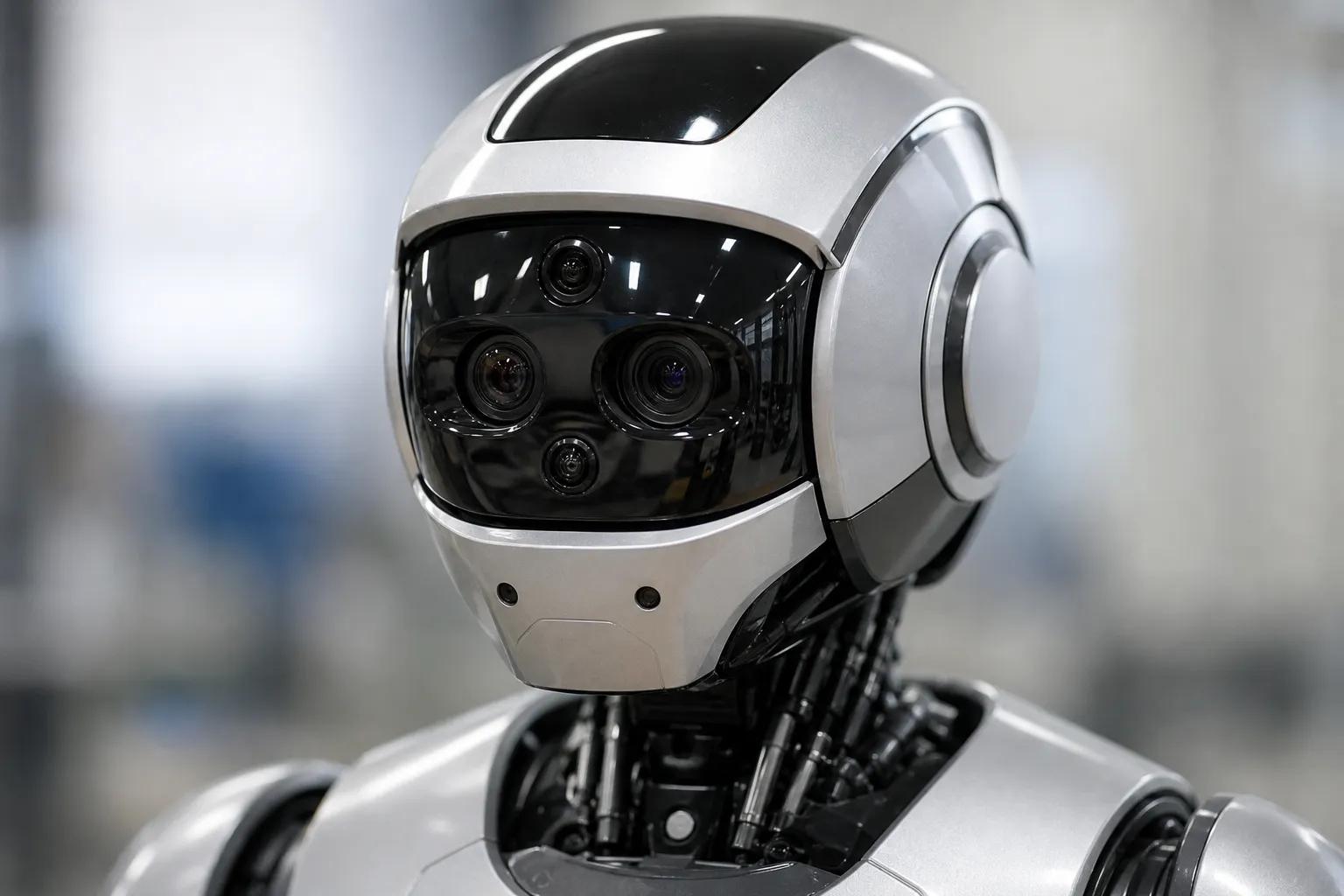
Swiss start-up Enact Intelligence has raised $30 million in a pre-seed funding round. Its goal is to develop robots that can detect mechanical forces as they move and learn assembly operations from demonstrations.
Founded in Zurich in March 2026, Enact Intelligence is tackling a hard problem in industrial robotics: manipulation tasks that require sensing contact, resistance or a part clicking into place. The company is led by Manuel Yves Galliker, who previously worked at 1X and Physical Intelligence. It aims to combine force perception with robot learning to automate delicate operations on production lines.
How Enact’s robots use their motors to sense contact
Enact’s technology is built on one idea: a robot should be able to feel mechanical forces during a manipulation task, not just observe its surroundings through cameras.
When a robot inserts a connector, its visual position is not always enough to tell whether the part is properly seated. The resistance it meets during the movement can provide additional information.
Canton Fair adds a dedicated service robot zone as buyers focus on reliability
Enact plans to use the forces detected at the actuators so its robots can adjust their movements when they come into contact with objects. The company compares this to the way humans perceive tension in their muscles and tendons.
According to Enact, the approach does not require adding artificial skin or extra tactile sensors. It relies on an integrated design of the motors, sensors, control system and artificial intelligence models.
Force sensing target: more than 1,000 measurements per second
Manuel Yves Galliker wants to develop motors that can measure forces more than 1,000 times per second, he told the Swiss newspaper NZZ. This rate is a development target, not a performance figure measured on a working robot.
Enact aims to use this data to adjust movements during operations such as:
- Inserting cables and connectors into their sockets.
- Fitting seals that require precise contact.
- Handling and assembling screws.
These applications require the robot to account for the resistance it meets while moving. The planned system could, for example, recognise a successful fit or adjust the pressure applied to a part.
Why three US startups are building humanoid robots on China’s Unitree G1 for lack of an alternative
Enact says it has already built its first motors and validated its technical approach. This progress is reported by the company and does not amount to a public demonstration of the announced assembly performance.
Training robots on new tasks in days instead of months
Enact also wants to make industrial tasks easier to teach through human demonstrations. The goal is to reduce the programming work needed when a factory changes products or assembly methods.
According to Manuel Yves Galliker, using richer mechanical data could cut the time needed to learn new tasks from several months to a few days. This is a forecast from the CEO, not a training time obtained in comparative tests.
The approach is aimed in particular at the final stages of industrial assembly, where products can vary and production runs may remain small. In these conditions, reprogramming each operation individually can make automation harder.
By combining learning from demonstration with force feedback, Enact wants its robots to reproduce manipulation tasks while taking into account the physical constraints they encounter.
Enact Intelligence team: founders from 1X, Physical Intelligence and Google DeepMind
Before founding Enact, Manuel Yves Galliker studied mechanical engineering at ETH Zurich and spent time as a researcher at Caltech.
He then worked at 1X and Physical Intelligence. According to a presentation provided by Enact, he led the team responsible for teaching 1X’s NEO humanoid robot to walk.
The start-up also brings together people who have worked at organisations such as Google DeepMind, Helsing and Amazon Robotics.
Enact says it has a team of ten people in Zurich and plans to quadruple its headcount by the end of 2027. This expansion is intended to support the development of its technology for industrial assembly operations.