

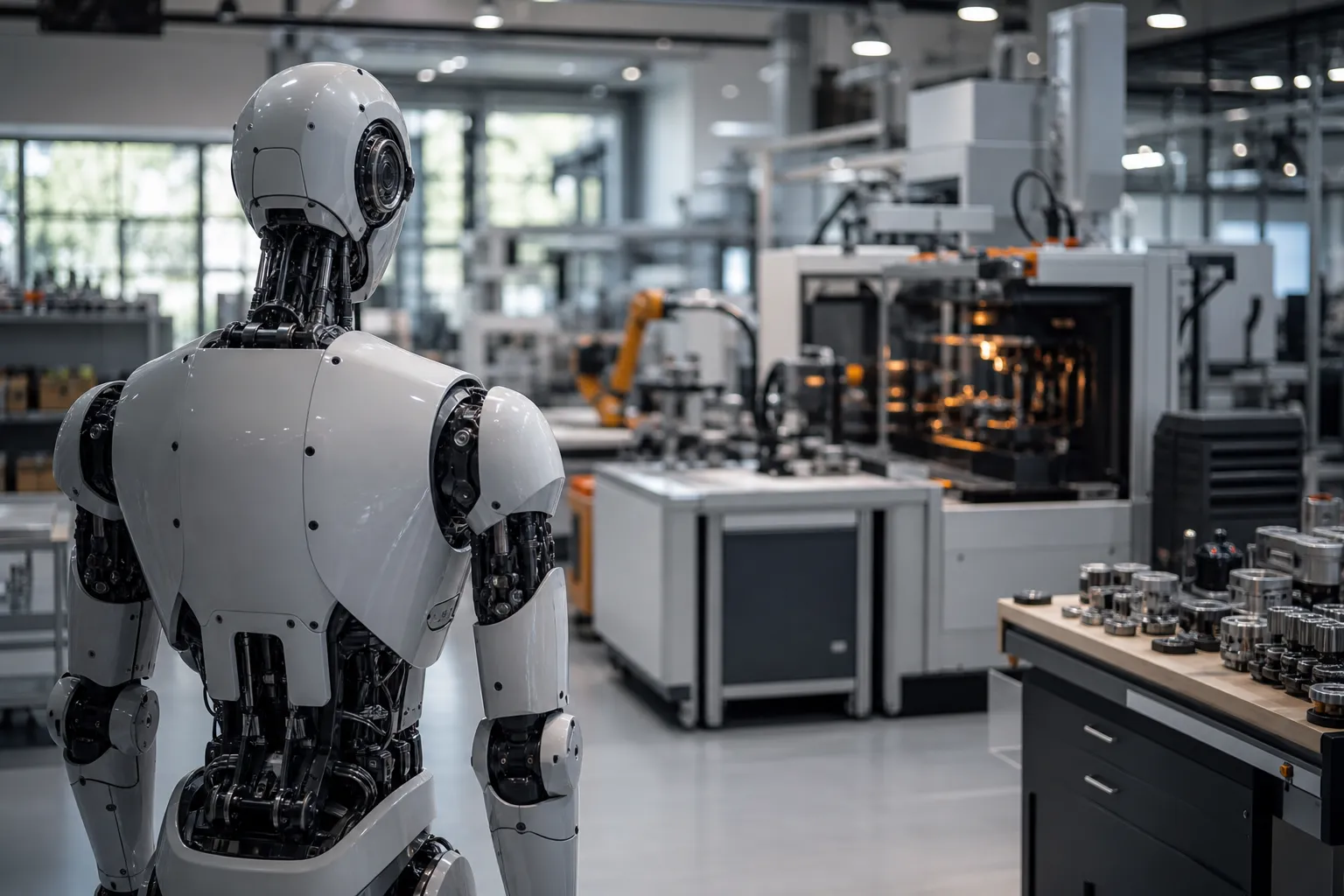
Swedish startup 120ft is coming out of stealth with €576,000 in funding. Its plan is to operate micro-factories equipped with humanoid robots so that brands can manufacture locally, in small batches.
Based in Stockholm and founded in 2025 by Martin Willers, 120ft is building a manufacturing model in which client companies pay for each finished product. The startup plans to own and operate its facilities itself, so brands do not have to buy robots or set up their own automated production lines.
120ft raises €576,000 from 22 angel investors
120ft has raised €576,000 from 22 angel investors, according to the company. The round coincides with its exit from stealth and is meant to fund its software and industrial infrastructure before it moves to commercial production.
The investors include Ted Persson, co-head of EQT’s Scaleup Europe fund; Sophia Bendz, partner at Cherry Ventures and former global marketing director at Spotify; Matthias Dantone, co-founder of Fashwell; and Sam Baker of Planet A.
Eka Robotics raises $150 million to develop its Vision-Force-Action AI for robotic manipulation
According to Sam Baker, the robot is only one part of the manufacturing solution. Brands also need tooling, software, quality control and operational systems. 120ft’s aim is to bring these functions together in a manufacturing service billed per finished product.
How 120ft’s container-based micro-factories work
120ft’s industrial concept is built on three 40-foot containers, which house component preparation, assembly, inspection and packaging. This setup gives the company its name.
The facilities combine humanoid robots, artificial intelligence, virtual simulation of production lines and proprietary orchestration software.
Product designs, bills of materials and quality requirements are converted into digital instructions. Assembly operations can then be simulated and tested virtually before they are carried out physically.
Google DeepMind trains Apollo humanoid robot with Gemini 4 Argon: 7 successful throws from video
120ft is targeting brands that want to produce smaller batches closer to their markets, rather than relying on large industrial orders and long international supply chains.
Robot training time cut from seven weeks to seven hours, according to 120ft
120ft says it has reduced the time needed to teach a robot a complete, end-to-end assembly skill from seven weeks in 2025 to seven hours in 2026, according to results published by the company.
The startup has also set a target of seven minutes for this training in 2027. This is an announced development goal, not a performance already achieved.
To illustrate its system, 120ft carried out a demonstration of robotic assembly of a lamp. The operations shown included fitting a cylinder lock, screwing in the bulb holder and running a functional test on the assembled product.
The demonstration is a technical milestone in the development of the manufacturing process the company intends to commercialise.
Manufacturing on demand: how brands would pay per product
Martin Willers, founder and CEO of 120ft, says he designed this approach based on his experience at Transparent. He describes waiting several months to receive thousands of products, before even knowing which colours customers actually preferred.
For small brands, this model ties up cash and forces them to forecast demand very early, he explains. 120ft intends to address this by offering local production in smaller batches, with billing based on the products actually manufactured.
The funding will now support the development of the facilities and the control software this business requires. In the longer term, 120ft plans to extend its model to industrial repair, upgrading and refurbishment of products.