

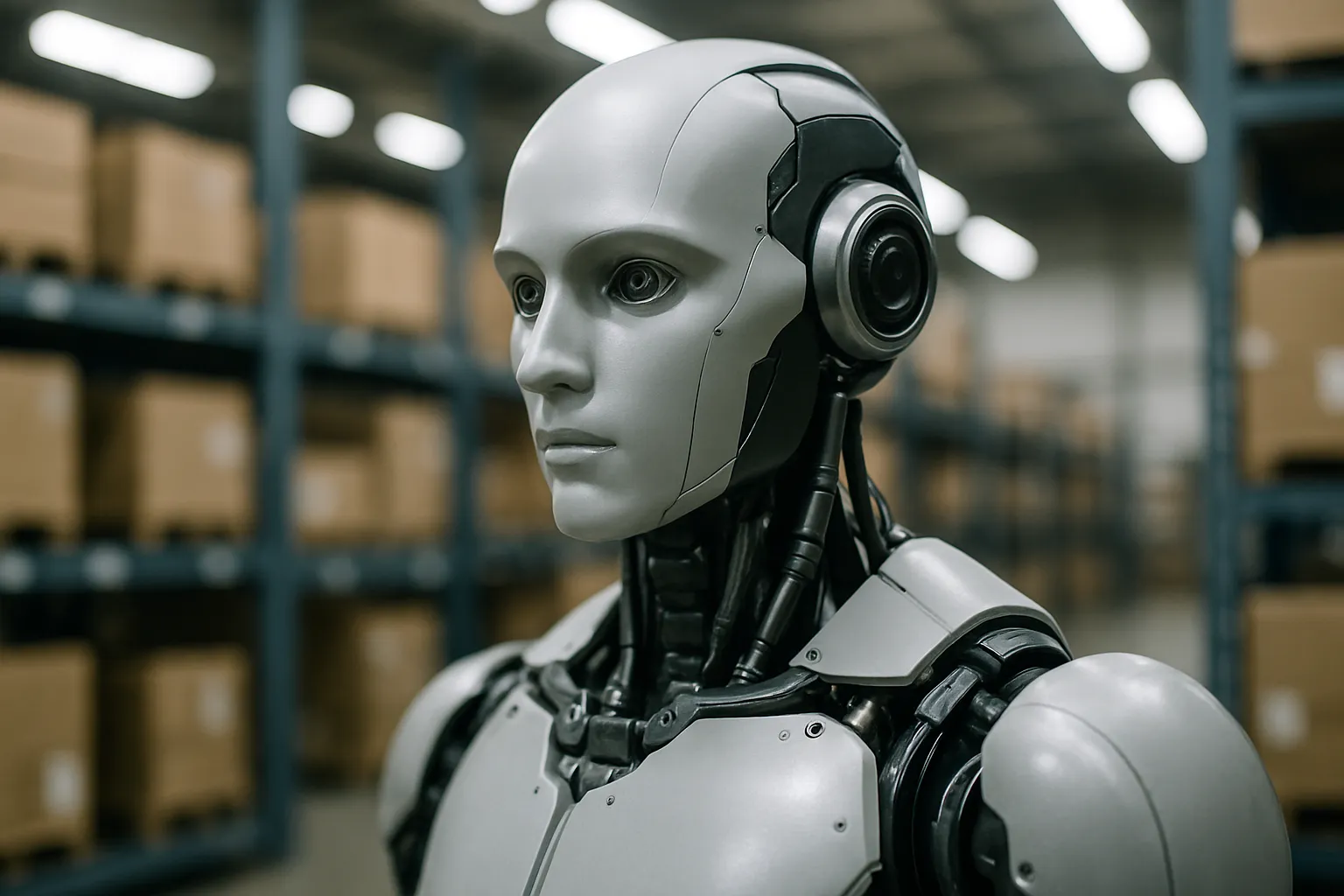
In the UK, CRM and ERP software attracts 6.7 times more searches than quoting and invoicing tools, according to Klipboard. The gap comes as the global installed base of industrial robots reaches around five million units.
Industrial automation is advancing, but the administrative side of technical service work remains a challenge for integrators, manufacturers and maintenance providers. An analysis by Klipboard, a field service management platform, highlights a difference in demand between scheduling software and the tools that turn a completed job into an invoice.
CRM and ERP software: 14,300 monthly searches in the UK
According to Klipboard’s analysis of UK search volumes up to August 2026, CRM software generates around 8,900 searches a month, compared with 5,400 for ERP software. Together, the two categories account for 14,300 searches a month.
By comparison, six categories related to quoting, invoicing and payment collection total around 2,140 monthly searches. They include invoicing software, quoting tools, digital invoicing, payment reminders and job invoicing.
AI Act CE marking for robots and AI systems in France: obligations due in 2027 and 2028
Field service management (FSM) software accounts for around 1,000 monthly searches in the UK, according to Klipboard. This category, used in particular to organise technicians’ travel and assignments, is a separate indicator and is not included in the ratio between CRM, ERP and invoicing tools.
Gabriel Cohen, vice president of Go-To-Market at Klipboard, believes the results reflect a business habit more than a lack of available technology. He sums up the problem as follows: “The work is done, the information stays fragmented and the invoice waits.”
How many industrial robots are in use? Around five million worldwide
The growth of automated equipment is increasing the need for maintenance and service tracking. According to figures released in September 2026 by the International Federation of Robotics (IFR), around five million industrial robots are operating in factories worldwide.
Each installation may require diagnostics, repairs and component replacements. These jobs involve several administrative steps: scheduling the technician, writing the visit report, signing off the completed work and issuing the invoice.
For robotic system integrators, manufacturers’ service teams and maintenance companies, the flow of information between these steps has a direct impact on how quickly services are invoiced.
Industrial AI adoption grows despite integration challenges
Data published by Cisco in April 2026 shows significant adoption of artificial intelligence in industry. The study, covering companies with revenue above $100 million, presents several indicators:
- 61% of the companies surveyed already use AI in their real-world industrial operations.
- 20% have AI deployments that have reached an advanced level of maturity.
- 83% plan to increase their AI spending.
- 57% report some degree of collaboration between information technology (IT) and operational technology (OT), while 43% report limited or no collaboration.
In the same study, among organisations reporting limited IT/OT collaboration, 47% cite network instability as the main obstacle to deploying AI at scale. Separately, 40% of respondents identify cybersecurity as the main barrier.
These findings illustrate the difficulty of connecting IT systems to the equipment and operations on industrial sites.
AI integration in UK businesses varies by sector
The UK Business Data Survey 2026 also highlights differences between sectors. Among businesses using artificial intelligence, 12% of manufacturing companies have integrated the technology into their existing systems, compared with 39% of companies in the information and communication sector.
This gap directly affects manufacturers seeking to link machine data to their management software. A piece of equipment can flag an anomaly, but that information must then be passed on to the teams responsible for scheduling and documenting the intervention.
Invoicing maintenance work: a challenge for service providers
To illustrate the problem, Klipboard describes a case in which a sensor detects a fault on a palletiser. A technician comes out, replaces a part and photographs the completed work. If the report stays on the technician’s phone before being entered into the CRM several days later, the production line may be running again while the job still has not been invoiced.
The difficulty therefore lies in the continuity of information between the shop floor, technicians and administrative departments. A CRM or ERP system on its own does not guarantee that a completed technical visit is invoiced the same day.
For companies maintaining robots and automated cells, bringing scheduling, job reports and invoicing together in a single record allows the information needed to issue invoices to be passed on without delayed re-entry.