

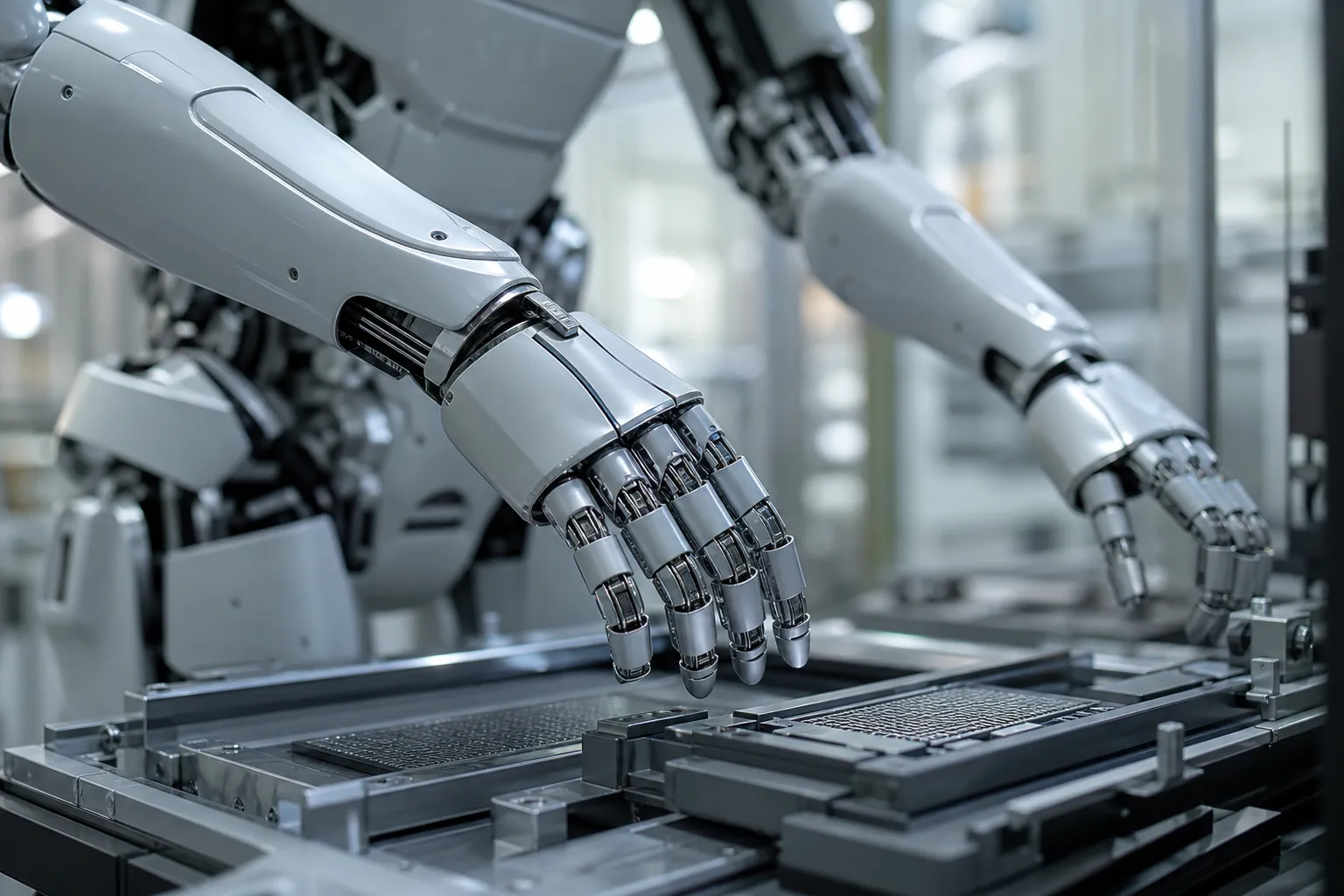
Chinese robotics chipmaker Huixi Technology announced on 22 October 2026 that it has closed two funding rounds. The money will go towards developing processors for embodied AI and speeding up commercial deliveries.
Huixi Technology continues to raise money for its semiconductor business aimed at robotics. The company has completed Pre-Series B-plus and Series B rounds, backed by several Chinese investment funds that specialise in artificial intelligence and robotics.
Who invested in Huixi Technology’s two funding rounds
The Beijing Artificial Intelligence Industry Investment Fund led the rounds. The Beijing Robotics Industry Development Investment Fund and Hidden Hill Capital also took part.
Existing shareholders, including Shunwei Capital and Cathay Capital, also joined the rounds.
According to Huixi Technology, its cumulative equity financing since the start of 2026 exceeds 2.5 billion yuan (RMB). This figure is the annual total announced by the company, not the amount of the two rounds that have just closed.
What the funding will be used for: embodied AI chips
Huixi Technology plans to use the funds to develop a new generation of high-performance chips for embodied artificial intelligence, or embodied AI. The term covers AI systems built into physical machines, robots in particular.
The company also wants to speed up commercial deliveries of its computing solutions. Its business combines processor design with the development of the software tools needed to use those processors in robotic systems.
Huixi computing platform already used in AGIBOT Genie G2 robots
Huixi’s technology portfolio includes the R1 AI, a system-on-chip (SoC), as well as the Huixi Embodied computing platforms. These products combine processors and software for deploying AI models, running simulations and handling real-time control.
Eka Robotics raises $150 million to develop its Vision-Force-Action AI for robotic manipulation
Huixi’s computing platform is already used in AGIBOT’s Genie G2 robots. This integration is a concrete application of its technology in robotics, while the new funding is meant to support the development of future processor generations and their commercial delivery.