

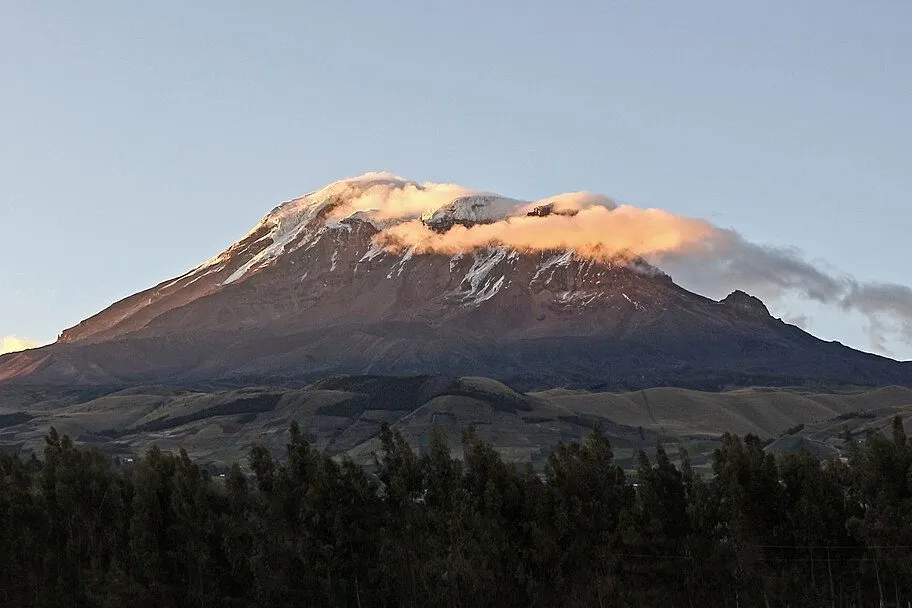
A humanoid robot has reached the summit of Chimborazo, an Ecuadorian volcano that rises to 6,200 metres. The machine, named Pemba, is a modified Unitree G1. The ascent took sixteen hours. It was not fully autonomous: on sections steeper than 30 degrees, the robot, which weighs about 35 kg, was carried by the human members of the expedition. The news was reported by Humanoids Daily.
The G1 is the bipedal robot made by Chinese company Unitree. Pemba is built on the same base, with modifications to withstand cold and temperature swings. The engineers added thermal management and ventilation systems and protected the joints against snow and cold. Unitree had previously operated a G1 in the Altay region of Xinjiang, China, in temperatures as low as -47.4 °C, according to the manufacturer.
What the Chimborazo climb proved about the Unitree G1, and what it did not
The Chimborazo ascent shows that a modified G1 can operate at high altitude and in extreme cold. It also shows its current limit: beyond a 30-degree incline, Pemba cannot move forward on its own. According to the project’s leaders, the next technical challenge is therefore to enable it to cross steep terrain unaided.
The Pemba project is led by engineer Pablo Berlanga Boemare, founder of Geologic Dome, who has previously been involved in nature conservation initiatives run by the World Wildlife Fund (WWF). His goal is humanoid robots capable of carrying out monitoring missions in remote protected areas, replacing networks of fixed cameras and sensors that are expensive to maintain. Monitoring wildlife, environmental change, poaching and illegal logging are all tasks that a robot could eventually handle autonomously, he says, thanks to its sensors and artificial intelligence. It would be connected via Starlink and recharged with solar power.
Unitree G1 on Everest: planned, but awaiting Nepal’s rules for robots
Two more expeditions are already scheduled as part of a programme called the “Triple Crown”. One targets Everest. The plan is to deploy the G1 between base camp, at 5,364 metres, and Camp IV, at around 7,920 metres, to test the battery, the load on the joints, locomotion performance and protection against the elements. The intended uses are glacier monitoring, search and rescue missions, and waste collection, a particular problem on Everest.
One obstacle remains, and it is not a technical one. Nepal does not yet have a legal framework for robot expeditions. The relevant authorities want to establish rules for non-human climbers before authorising an ascent, The Kathmandu Post reports. The project’s initiators are working with the administration to speed up the adoption of these rules. A Pemba ascent of Everest is being considered for autumn or winter 2026 at the earliest, with no certainty that it will take place.
Further reading: Unitree G1: specifications, price and demonstrations · Unitree: the maker of the affordable humanoid robot