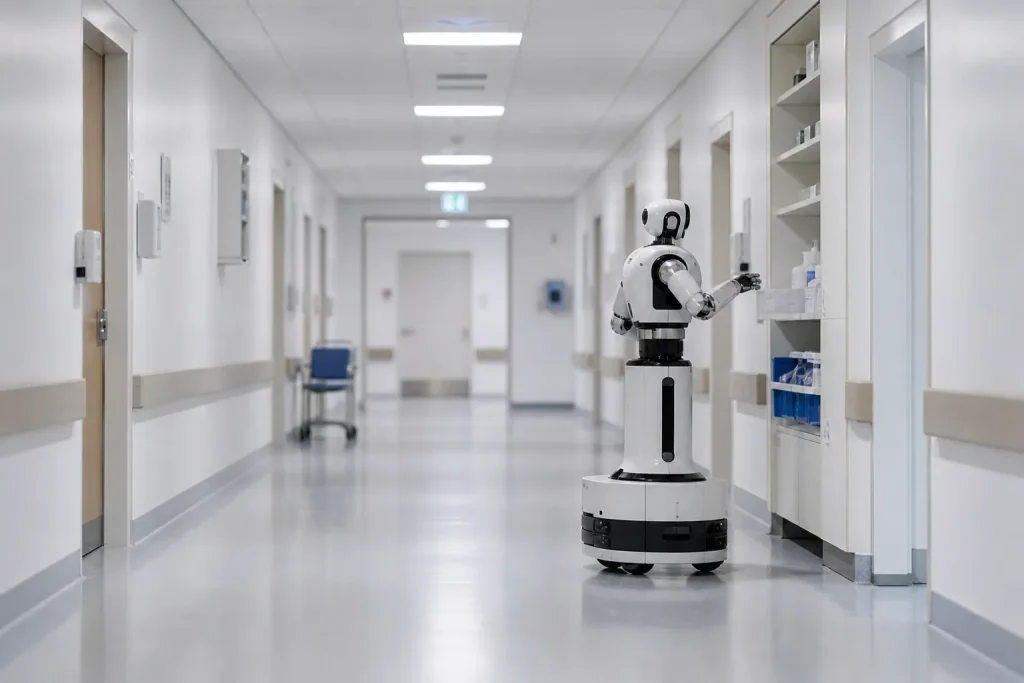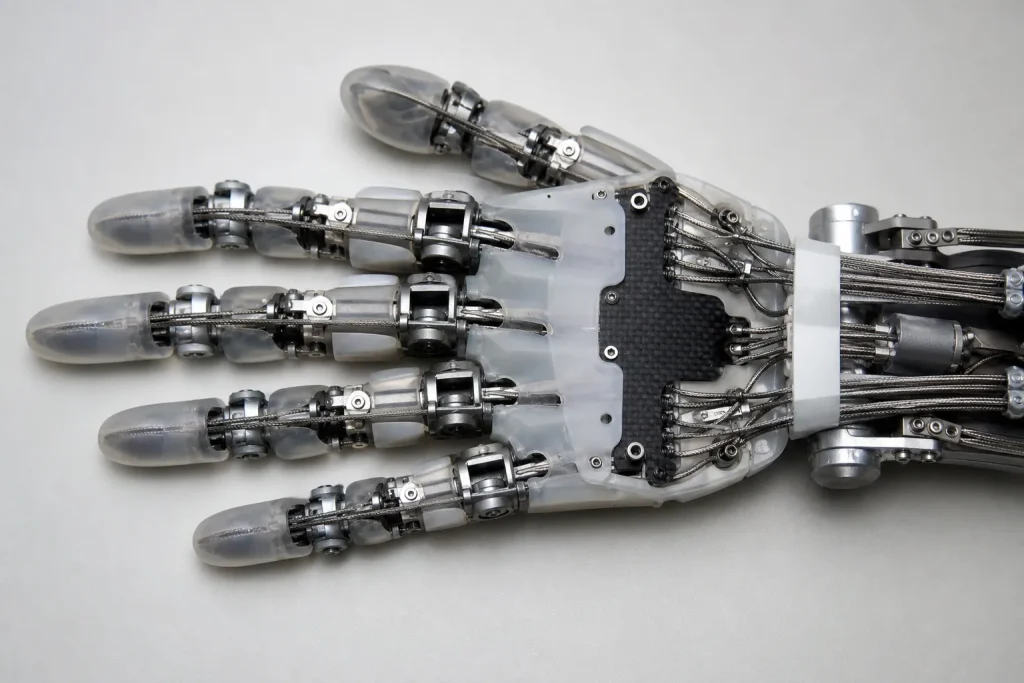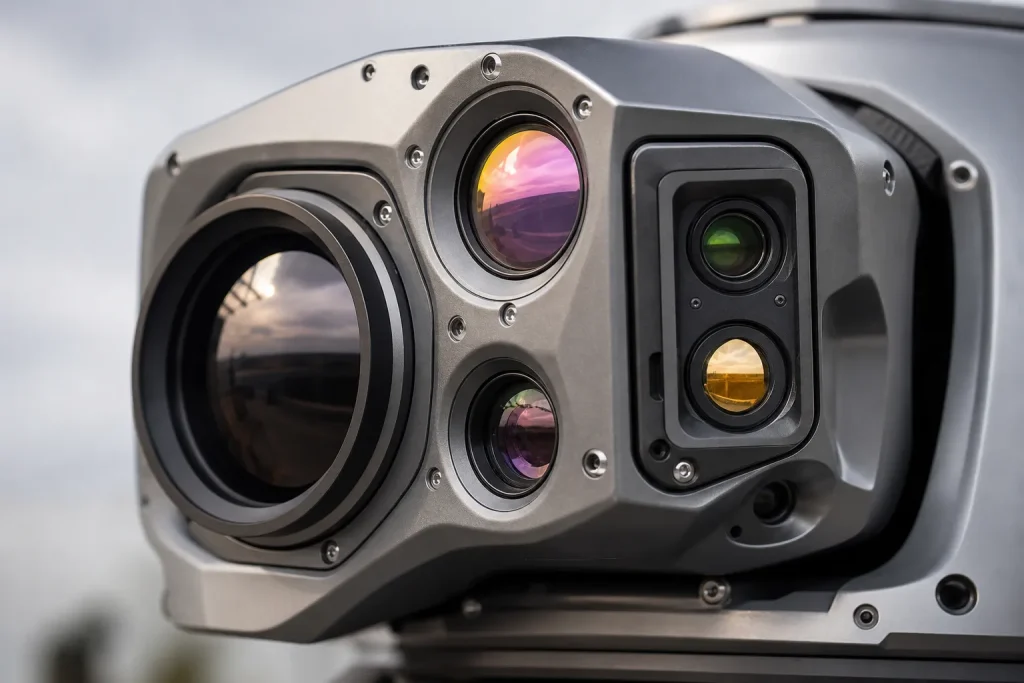
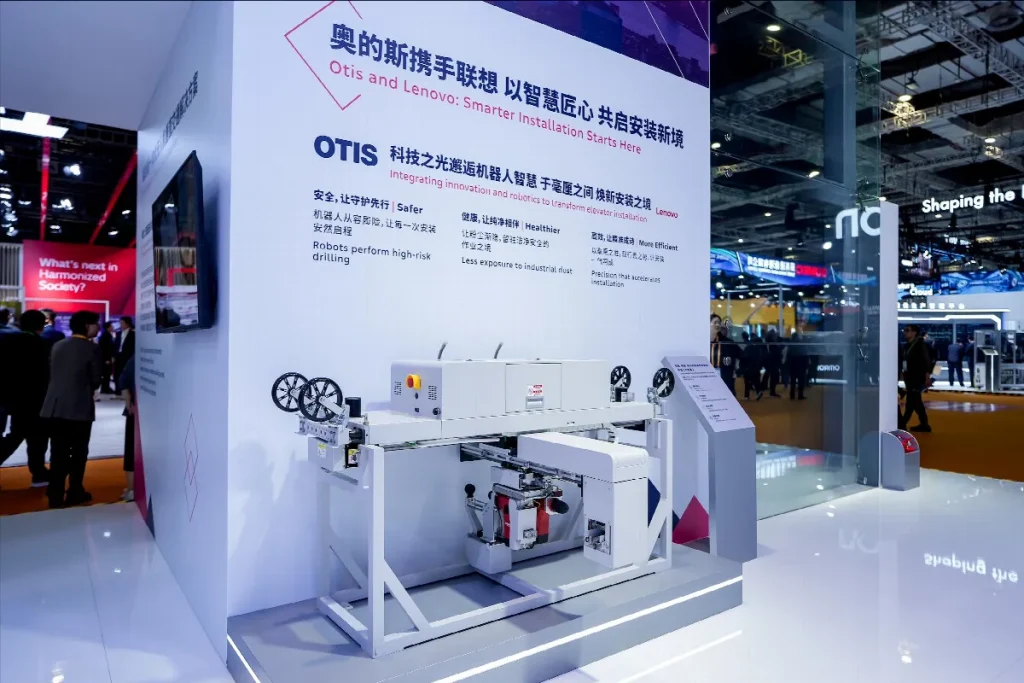
Lenovo and OTIS have presented a robot in China designed to automate drilling in skyscraper elevator shafts. Its first deployment is planned on the Tianjin 117 tower construction site, with the aim of reducing risks for workers.
Chinese technology group Lenovo has teamed up with elevator specialist OTIS to develop a robotic system for high-rise installation work. The collaboration combines OTIS’s installation technologies with Lenovo’s expertise in artificial intelligence, computing and industrial robotics. The robot is meant to take over repetitive tasks carried out inside vertical shafts, where working conditions are especially demanding.
What the robot does: automated drilling in elevator shafts
When an elevator is built, crews work inside the vertical shaft once the concrete has been poured. Among other tasks, they drill holes to fix the guide rails, prepare the openings for the landing doors and install the related components.
The robot developed by Lenovo and OTIS targets these drilling operations. According to OTIS, the technology could fully automate the drilling tasks involved, reducing manual work inside the shafts.
This work is physically demanding and exposes workers to several risks, including those linked to working at height and to the dust produced by drilling. OTIS believes robotisation could reduce this exposure, ease the workload and make installation work more consistent.
Where it will be used first: the Tianjin 117 tower
The first application of the technology is planned on the construction site of the Tianjin 117 tower in China. Described as the tallest building under construction in the country, the skyscraper is a particularly demanding project for installing vertical transport equipment.
The tower is set to house elevators described as the tallest in the world. OTIS is reported to have supplied a total of 266 elevators and escalators for the project, which faces schedule pressures and major construction challenges.
The planned deployment at Tianjin 117 is the robot’s first intended application. At this stage, it is a technology presentation paired with a plan for on-site use, not a commercial launch.
How Lenovo and OTIS split the work
The division of work between the two partners follows their respective specialisations. OTIS brings its experience in elevator installation and maintenance, while Lenovo contributes its artificial intelligence and industrial robotics technologies.
For OTIS’s Chinese subsidiary, the main benefit of the collaboration lies in reducing human involvement in repetitive tasks inside the shafts. The company also expects automated drilling to improve installation quality.
The Tianjin 117 site is therefore set to be the first real-world application of the system, in an environment where repetitive drilling and safety constraints make robotisation particularly relevant for installation work.