AIDIN Robotics and Korea Midland Power have won an award at the 2026 International Robot Contest for a quadruped robot built to inspect power plants. Fitted with sensors and AI, it detects anomalies in hazardous areas.
South Korean manufacturer AIDIN Robotics and Korea Midland Power’s (KOMIPO) Sejong power generation division jointly developed a robotic system for monitoring energy facilities. Their joint team, named SAI Guard (Sejong AI Guard), received the Korean Agency for Technology and Standards Director’s Award in the product development and use category of the KOMIPO Intelligent Robot Challenge. The award ceremony took place on 13 November 2026 in Daegu, South Korea.
A quadruped robot for inspecting hazardous areas in power plants
Power plants require constant inspections to monitor the condition of their equipment. Some areas contain high-temperature, high-pressure steam pipes as well as gas installations, which expose workers to the risk of accidents.
The many staircases, changes in floor level and pipe networks also make it hard for wheeled mobile robots to move around, especially between floors.
To deal with these constraints, AIDIN Robotics and KOMIPO designed a quadruped robot that can carry out inspection rounds and look for signs of anomalies in the facilities. The requirements of the inspection teams were built in from the start of development.
The project brings together the robot’s manufacturer and staff at the Sejong plant, who are involved in using and evaluating it in the field.
What sensors does the robot use to detect anomalies?
The robot developed by AIDIN Robotics carries several instruments for checking the condition of industrial equipment. According to the manufacturer, its perception system includes:

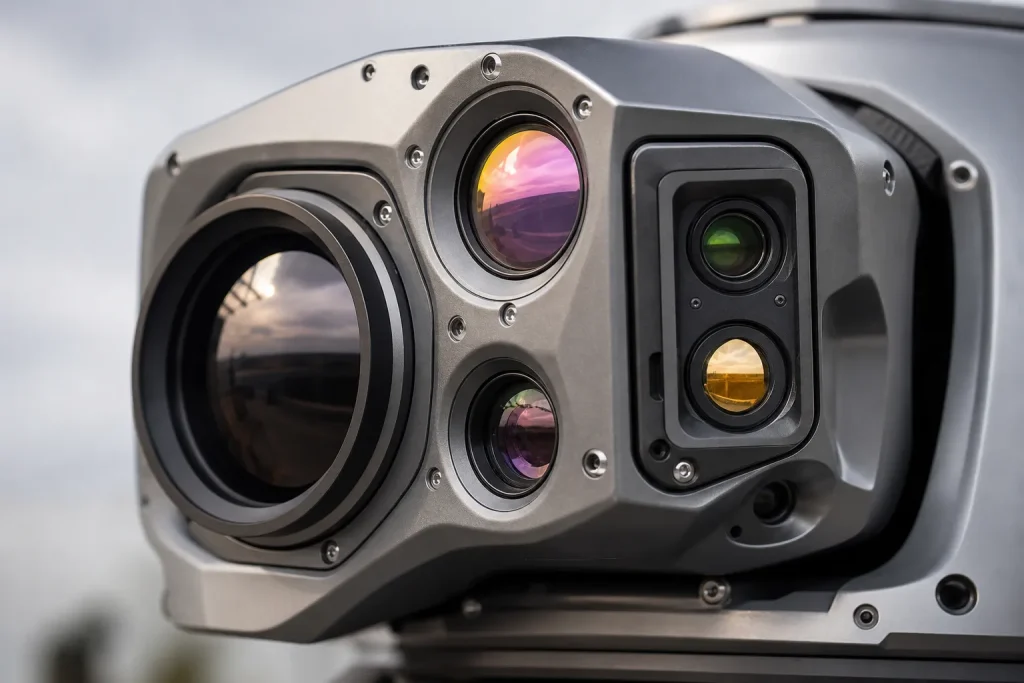
- A thermal camera covering a temperature range of -40 to 400 °C.
- An optical camera with a 30× optical zoom for observing equipment from a distance.
- A multi-gas sensor that can detect four types of gas.
- A 360-degree panoramic camera for observing the robot’s surroundings.
- A directional microphone for picking up sounds from the equipment.
The collected data feeds an artificial intelligence system that recognises pipes and valves. The AI also analyses the measurements to identify abnormal temperatures, unusual noises and gas leaks.
This combination of sensors lets the robot look for several categories of anomaly during its rounds, without always requiring an operator to be present in high-risk areas.
IP67 rating, 30 kg payload and replaceable legs
AIDIN Robotics developed the quadruped’s main hardware components, including its reducers and actuators, as well as its supervision software.

According to the manufacturer, the robot has an IP67 rating for water and dust protection and can carry a rated payload of 30 kg.
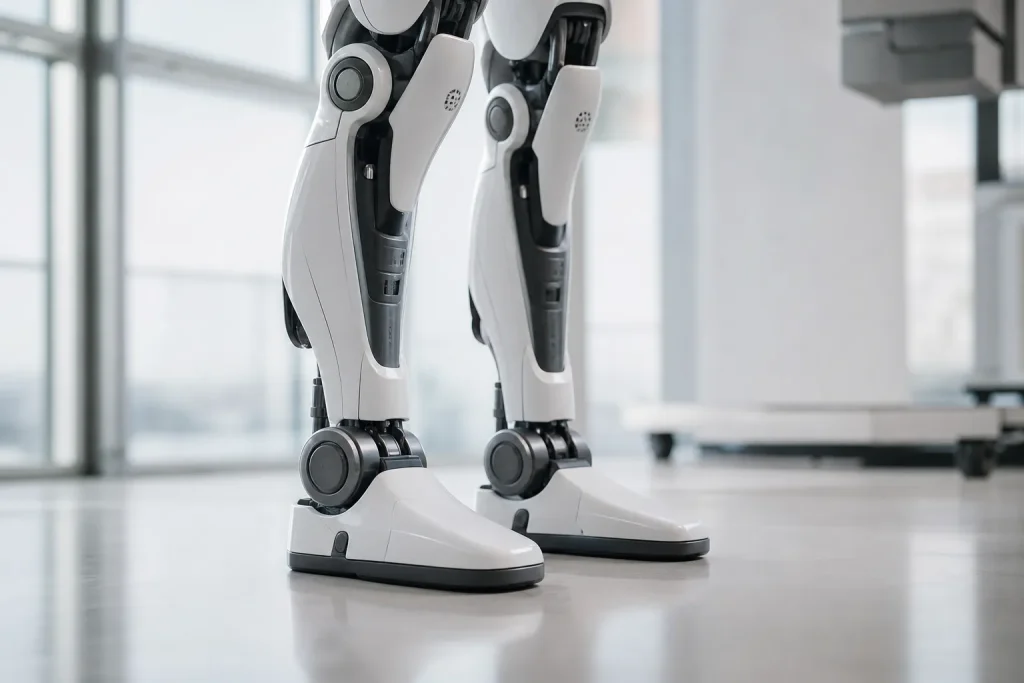
Its modular design is another feature of the project. When a leg fails, maintenance teams can replace just that module rather than working on the whole robot.
AIDIN Robotics designed this architecture to make repairs easier directly on the industrial site and to limit downtime caused by maintenance work.
How the robot connects to the ACS supervision system
The robot is integrated with the ACS supervision system to automate repetitive inspection tasks. The information recorded during rounds is also used for preventive maintenance of the equipment.
For the Sejong teams, the operational benefit lies mainly in detecting anomalies quickly without sending workers directly into the most dangerous areas.
Lee Hyun-yong, head of AIDIN Robotics’ robotic systems division, says development was carried out together with the users in order to adapt the robot to the constraints of power plants. The company places particular emphasis on resistance to harsh environments and the ability to repair the hardware on site.
The project is still at the stage of real-world demonstrations and product improvement. AIDIN Robotics plans to continue developing it for safety inspections in power generation facilities and the energy sector.
Award at the 2026 KOMIPO Intelligent Robot Challenge
The award won by SAI Guard is part of the 21st International Robot Contest, organised by South Korea’s Ministry of Trade, Industry and Energy and the city of Daegu, under the supervision of the Korea Institute for Robot Industry Advancement (KIRIA).
The KOMIPO Intelligent Robot Challenge aims to identify robotic technologies that can be applied in power generation facilities. Its product development and use category assesses, among other things, how complete the technologies are and how well they meet operational needs.
KOMIPO’s Sejong power generation division plans to continue on-site demonstrations and gradually extend the robot’s use in inspection operations.