Google DeepMind has introduced Gemini Robotics 2.5, an AI model designed to improve object manipulation and the execution of robotic tasks. Tested on more than 200 tasks, it was also used with the Apollo 2 humanoid on a Mercedes-Benz production line.
With Gemini Robotics 2.5, Google DeepMind continues its work on artificial intelligence applied to the physical movements of robots. This vision-language-action (VLA) model combines an understanding of instructions and of the environment with motion control. Google reports progress in dexterity, learning speed and reliability, particularly for operations carried out in environments that are hard to predict.
Faster, more precise manipulation across more than 200 tasks
Google DeepMind evaluated Gemini Robotics 2.5 on more than 200 individual tasks, including manipulations that require precision and adaptation to the characteristics of the objects involved.
The tests include serving food with tongs, tying a ribbon into a bow around a gift box and transferring liquids with a pipette. These operations call on different grasping, coordination and motion-control capabilities.
According to the results released by Google, the success rate improves by 30 to 100% depending on the task compared with the previous model. The time needed to complete the tasks also falls by 20 to 30% in the tests presented by the company.
These results come from Google’s own evaluations. They illustrate the model’s stated performance on the tasks tested, rather than an identical success rate across all robotic applications.
Apollo 2 humanoid robot reaches 96% success rate at Mercedes-Benz
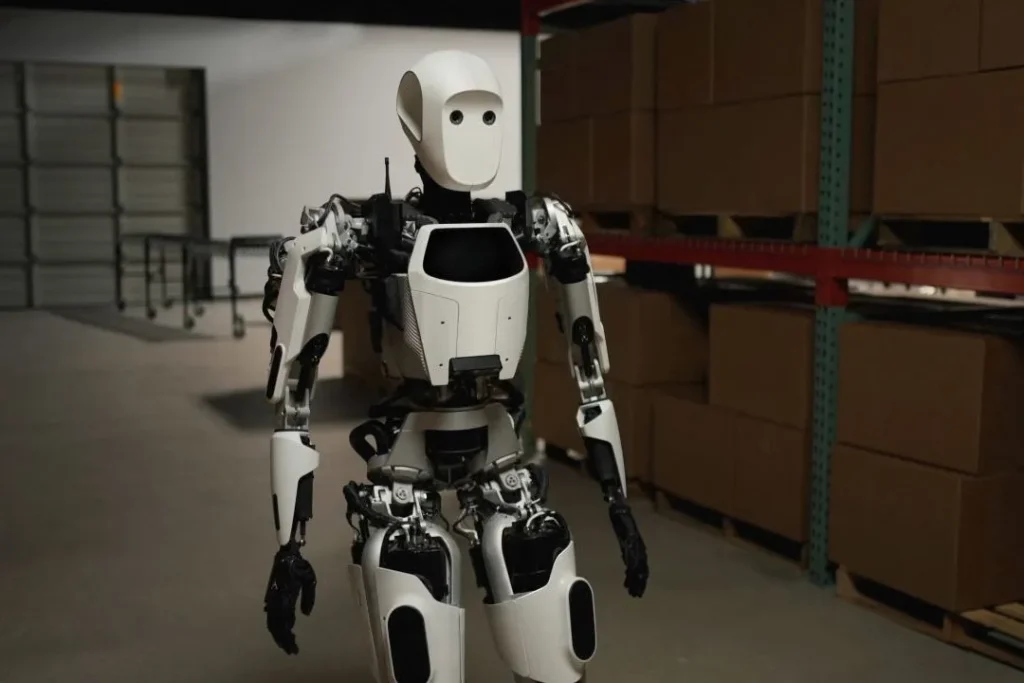
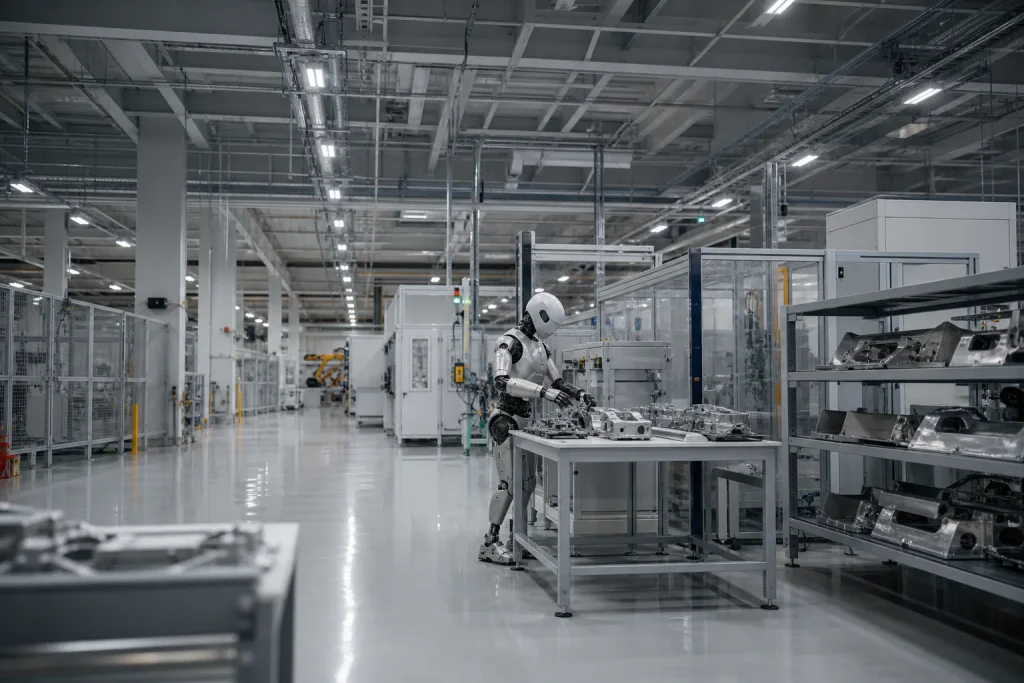
Google also tested its model in an industrial setting, on a Mercedes-Benz car production line. This proof of concept (PoC) uses Apollo 2, the humanoid robot developed by Apptronik, to pick and pack automotive parts.
During this demonstration, Google reports a 96% success rate for the operations carried out by the robot. The trial shows the model in use in a real production environment, beyond laboratory experiments.
This is an industrial proof of concept, not the announcement of a broad commercial deployment of Apollo 2 running Gemini Robotics 2.5.
Which robots run Gemini Robotics 2.5: five-finger hands and two-finger grippers
Gemini Robotics 2.5 is designed to run on different robotic architectures. Google presents two configurations that use distinct grasping systems.
- Apptronik Apollo 2: humanoid robot fitted with five-finger SharpaWave hands, with 22 degrees of freedom (DoF) according to the specifications presented.
- Franka Duo: Franka robotic platform that uses two-finger parallel grippers to handle objects.
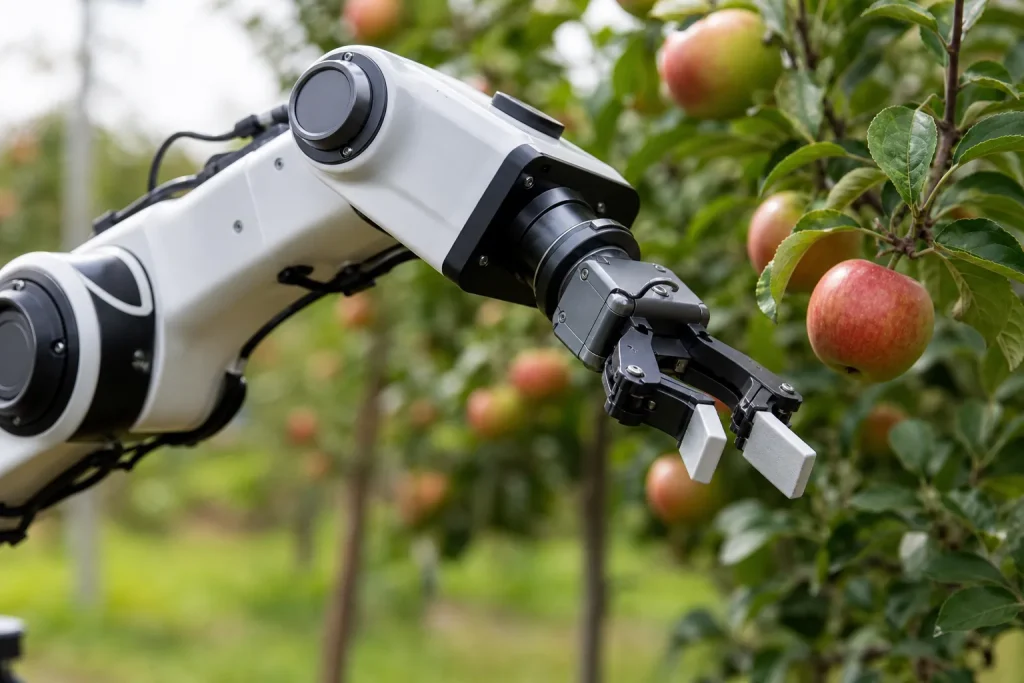
This compatibility makes it possible to apply the same AI model to robots with different manipulation mechanisms. Google places particular emphasis on the ability to use everyday tools and to handle soft or fragile objects in unstructured environments.
Robot safety: tighter motion control and a jailbreak benchmark
The new version also brings improvements intended to make robots’ physical interactions with their surroundings safer. Google says it has strengthened motion control to limit dangerous behaviour while tasks are being carried out.
The company is also introducing a new benchmark dedicated to jailbreak-style adversarial attacks applied to robotics. This evaluation is meant to test how well the model’s safeguards hold up against circumvention attempts that could affect the physical behaviour of the machines.
These developments extend Google’s work on whole-body intelligence, which involves coordinating the movements of a robot’s different parts. With Gemini Robotics 2.5, the company aims in particular to speed up the acquisition of new skills and to improve how they are executed across several types of robotic platforms.