Swiss start-up Embodied AI has introduced AIR, a wheeled humanoid robot designed to work alongside industrial operators. Presented at Humanoid Europe 2026 in Munich, it relies on lightweight arms and on teleoperation to get it working.
Based in Lausanne, with an office in Rome, Embodied AI presents AIR as a machine for factories rather than research labs. The company plans to open orders after its chief executive, Francesco Stella, presents the robot at Humanoid Europe 2026. It is also targeting CE marking in 2027, an important step before the robot can be sold as an industrial machine in the European Union.
A two-armed mobile robot built for industrial environments
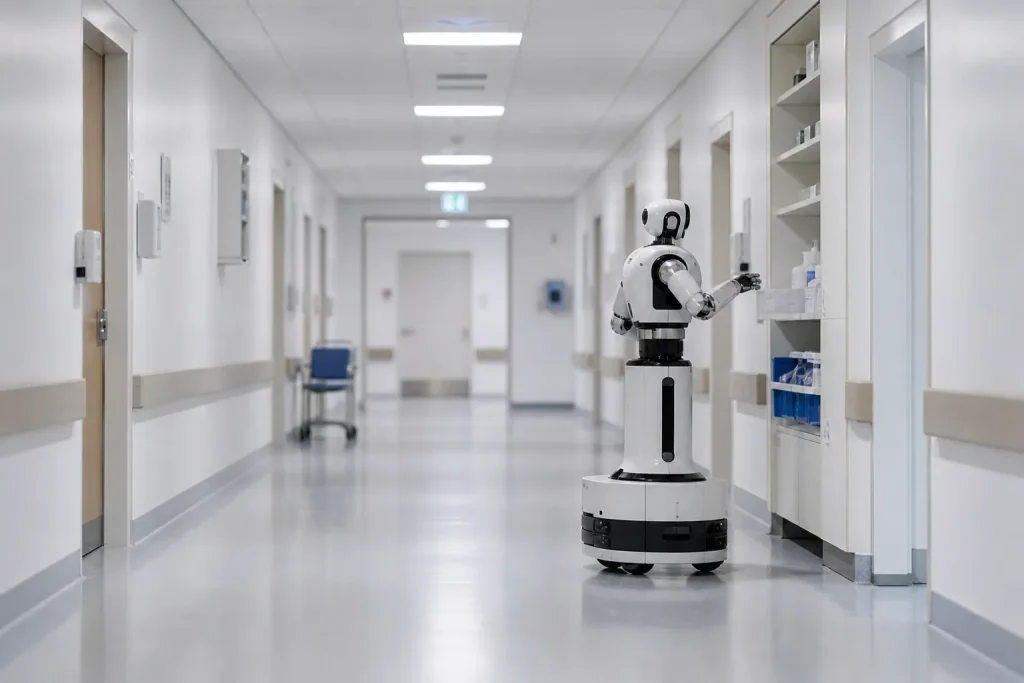
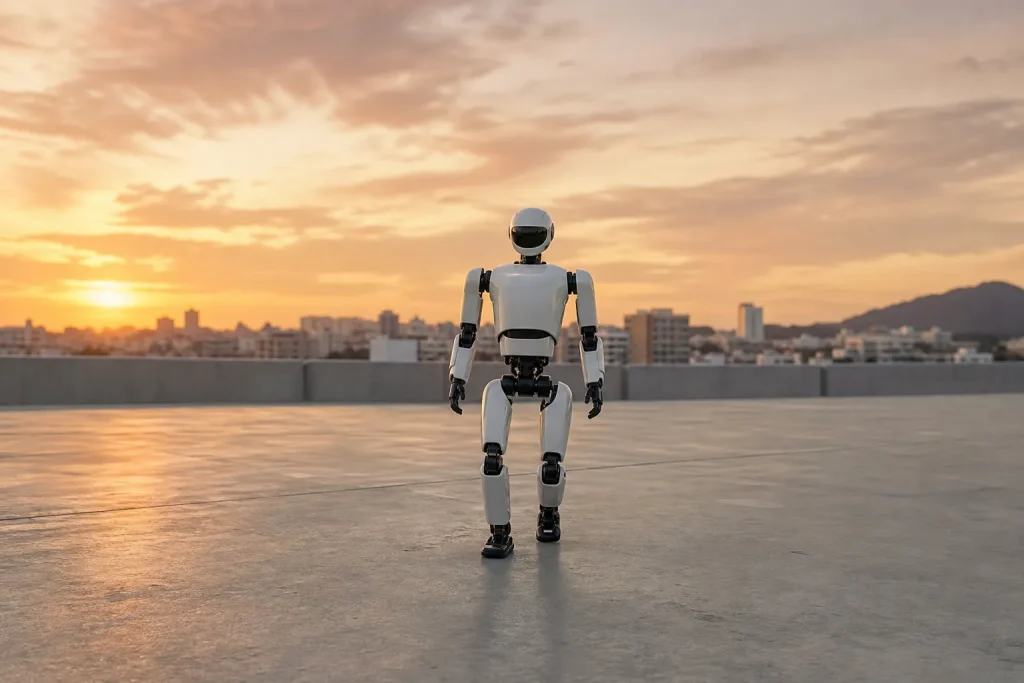
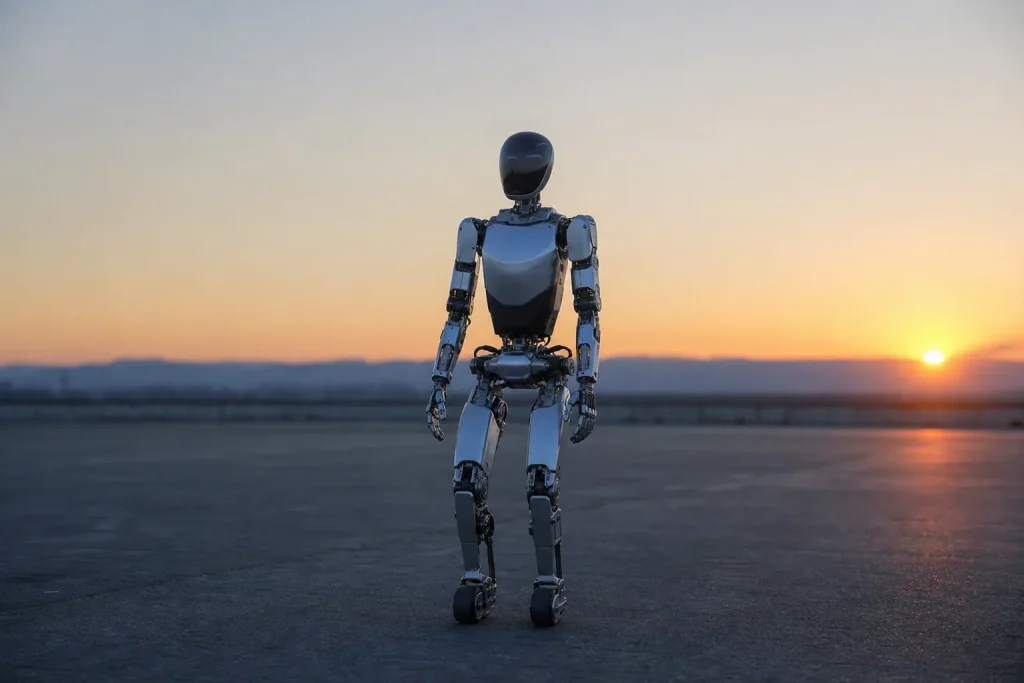
AIR has a torso, two articulated arms and a head, mounted on a wheeled base. Although it is called a humanoid robot, it has no legs. The design combines an upper body capable of manipulation with a mobile platform for moving around factories.
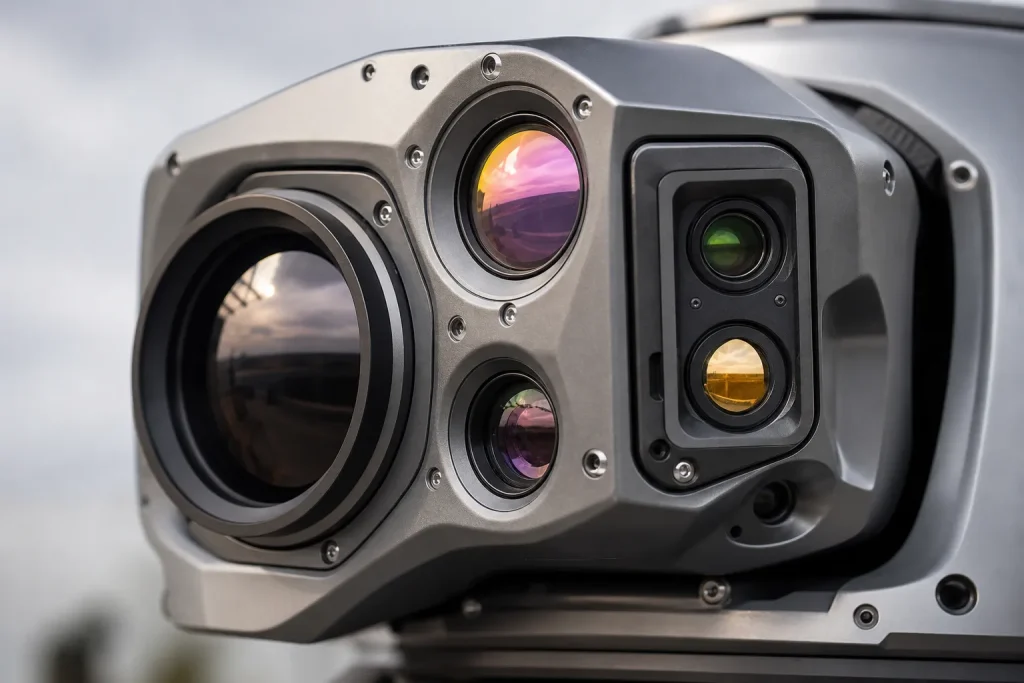
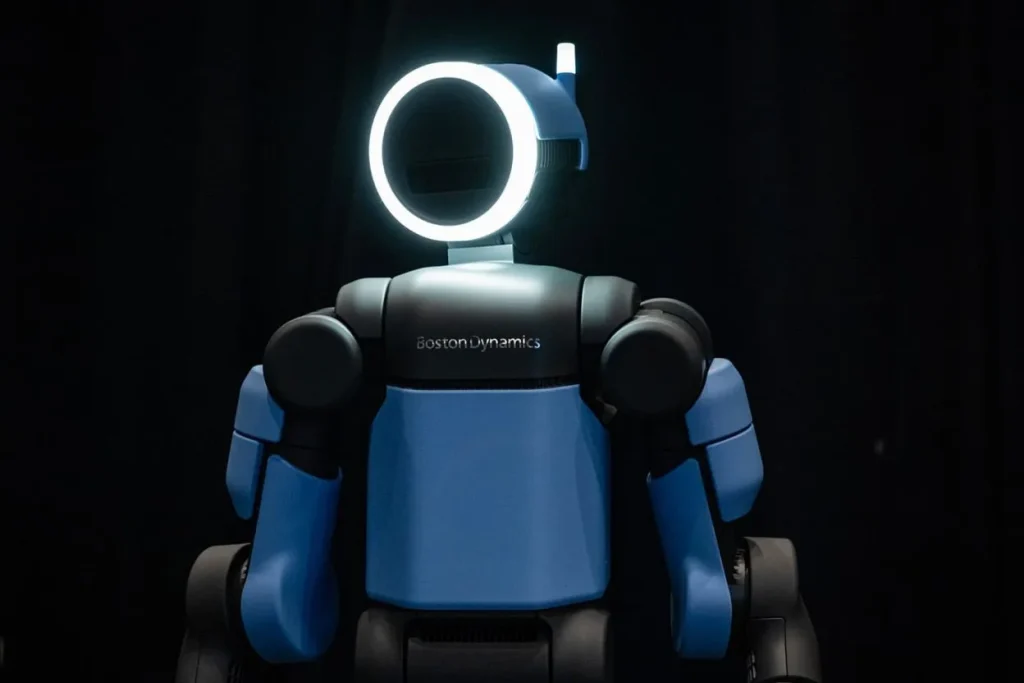
Photographs released by Embodied AI show a soft, textured turquoise upper shell. A metal joint is visible behind a circular opening at the shoulder, with cables linking the mechanism to the arm. The head has an open-frame structure and a camera on each side.
Embodied AI intends the machine for industrial tasks carried out close to staff. The company says AIR can work alongside operators without a safety cage, thanks in particular to the mechanical design of its arms. This capability is presented as a feature claimed by the manufacturer.
How AIR’s cable-driven arms reduce moving mass
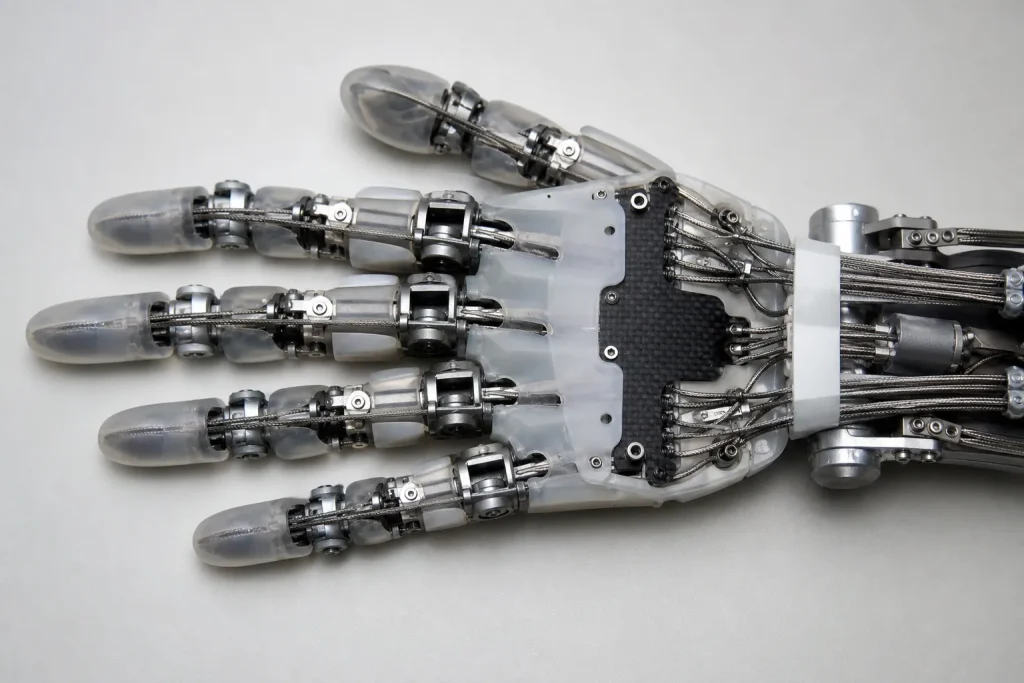
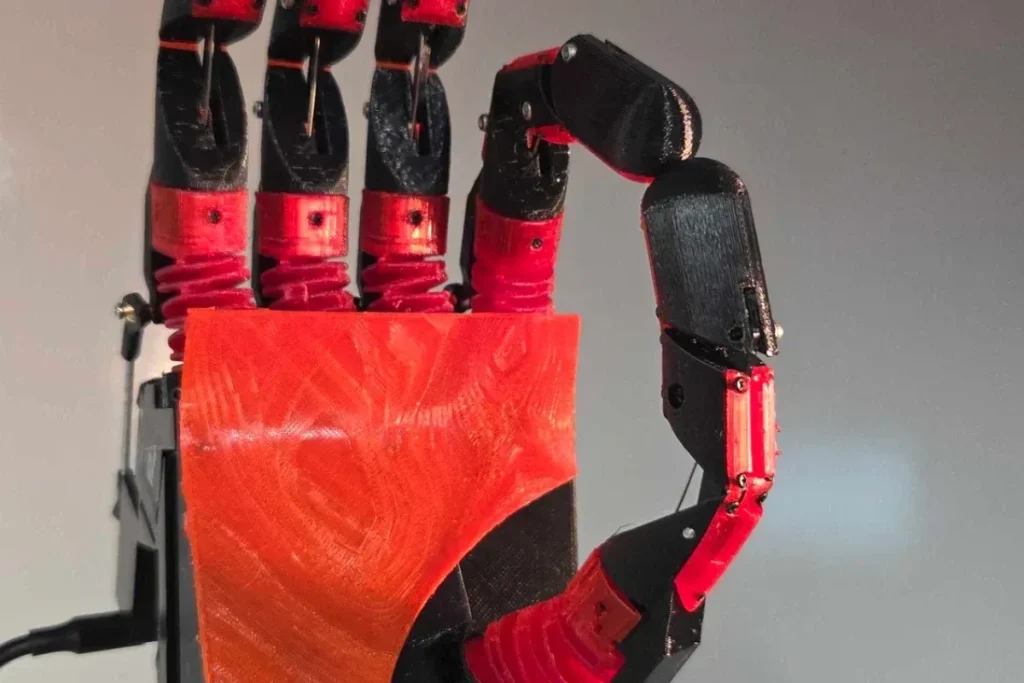
AIR’s main technical distinction lies in its transmission system. Rather than placing the motors and heavy components directly in the joints, Embodied AI concentrates these parts in the torso and drives the arms with cables, using a tendon-driven transmission principle.
The aim of this design is to reduce the mass of the moving parts. The arms are also designed to give way mechanically when they hit an obstacle or come into contact with a person, a property known in robotics as compliance.
Angelo Burgarello, a partner at Look AI Ventures, an investor in Embodied AI, describes a tendon-driven arm that weighs 2 kg and can lift 5 kg. These figures come from his presentation of the mechanism and are not an independent measurement of the complete robot’s performance.
Francesco Stella stresses the importance of this approach for physical safety: unlike a faulty software recommendation, a faulty movement by a robot can cause dangerous contact with a person. AIR’s mechanical design is intended specifically to reduce the consequences of such contact.
Teleoperation for the first factory deployments
Embodied AI plans industrial deployments that initially rely on a human operator controlling AIR remotely. From its first shift in the factory, the robot should therefore be able to carry out tasks under human control, before a control policy suited to those tasks has been trained.
This approach separates the initial period of use from the learning of robot behaviours. AIR is presented as a machine that can start working through teleoperation, not as a robot that performs all of its tasks autonomously as soon as it is installed.
When can you order AIR? Orders after Humanoid Europe, CE marking targeted for 2027
Embodied AI says orders for AIR will open after its presentation in Munich. This commercial step is separate from the certification required to place it on the European market as a finished industrial machine.
The manufacturer is targeting CE marking in 2027. This timeline matches the date the EU Machinery Regulation (EU) 2023/1230 starts to apply, 20 January 2027. The regulation replaces the Machinery Directive and introduces requirements covering, among other things, machines with evolving behaviour and collaborative operations close to people.
For AIR, obtaining CE marking is a condition for selling it as a finished machine in the European Union. The announcement that orders are opening therefore does not mean that industrial deliveries have already taken place.
Who is behind Embodied AI: an EPFL spin-off and its investors
Embodied AI is a 25-person company spun off from the École polytechnique fédérale de Lausanne (EPFL). Its chief executive and co-founder, Francesco Stella, who was 28 at the time of the announcement, holds a PhD in robotics from EPFL and has also carried out research at MIT.
The two other co-founders are Kai Junge, chief technology officer, who holds a PhD in robotic manipulation from EPFL after studying at Cambridge, and Max Polzin, chief operating officer, formerly technical lead at Seervision, a camera automation company later acquired by Q-SYS.
Embodied AI has announced a first funding round led by Faber VC. Its investors also include Look AI Ventures, Techshop Capital, Vento, Plug and Play, Kickfund and Excellis.
With AIR, the company is targeting manufacturers directly, unlike several wheeled humanoid robots developed mainly for research and developers, such as Carnegie Mellon’s Pixel, New York University’s MABEL and Feather’s robot.