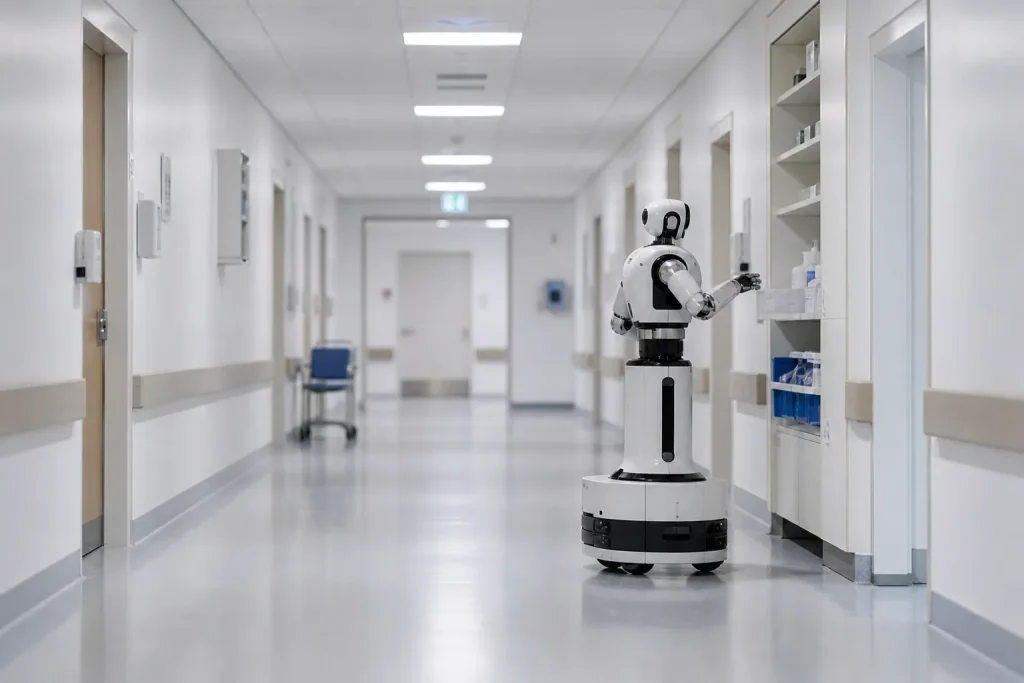
Apple has reportedly developed HALO, a control system for humanoid robots that can operate without an internet connection or a remote control. Shown on a Unitree G1, it combines a Mac mini M4 Pro, artificial intelligence models and training in simulation.
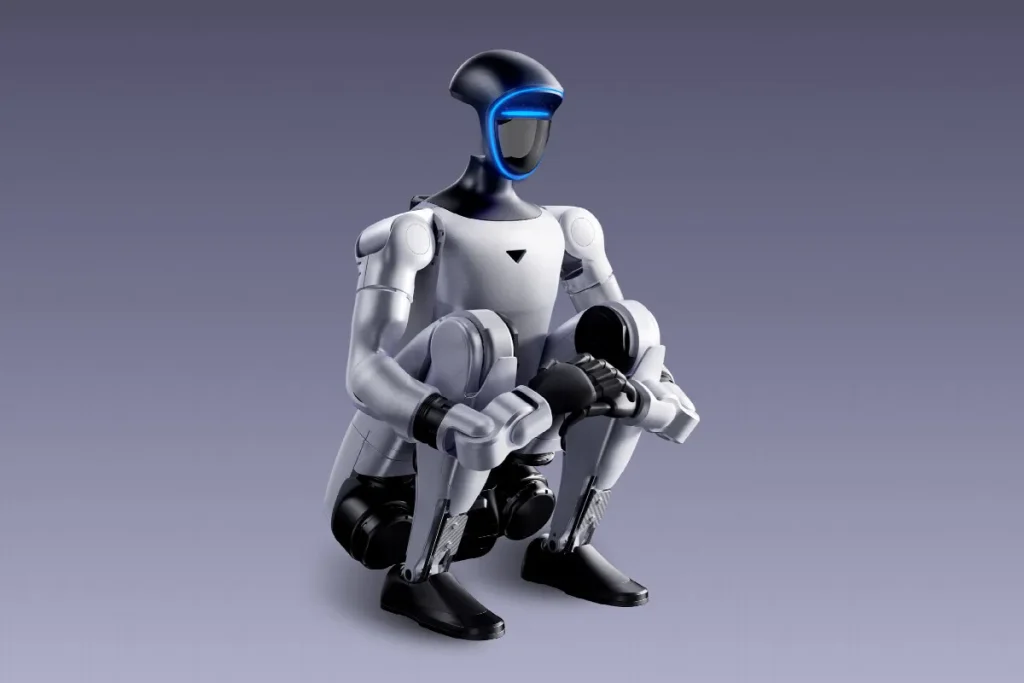
According to 36Kr, the HALO research project is built on a Unitree G1 humanoid robot, a model launched in May 2024, rather than on a machine designed entirely by Apple. The information comes from press reports and has not been confirmed by an official page from the manufacturer. The demonstration focuses on the system’s ability to move through an unfamiliar indoor environment.
What the Apple HALO demo shows: moving around and handling objects
The robot goes under a table, moves boxes and sidesteps through a partly closed bedroom door before reaching a chair and sitting down.
These sequences show a system that can adapt the robot’s movements to different obstacles and narrow passages. The demonstration reported by the outlet runs entirely offline, with no remote control and no cloud connection.
The hardware is an unusual combination: the body of the Unitree G1, a Mac mini M4 Pro carried on the robot’s back, and a large language model from Alibaba’s Qwen family. HALO is therefore the name of the research project and its control system, not a new humanoid robot model sold by Apple.
How HALO was trained in 1,000 virtual homes
HALO’s main technical focus is the production of training data. Humanoid robots need to learn to recognise where objects are placed, understand physical constraints and adapt their movements to varied environments.
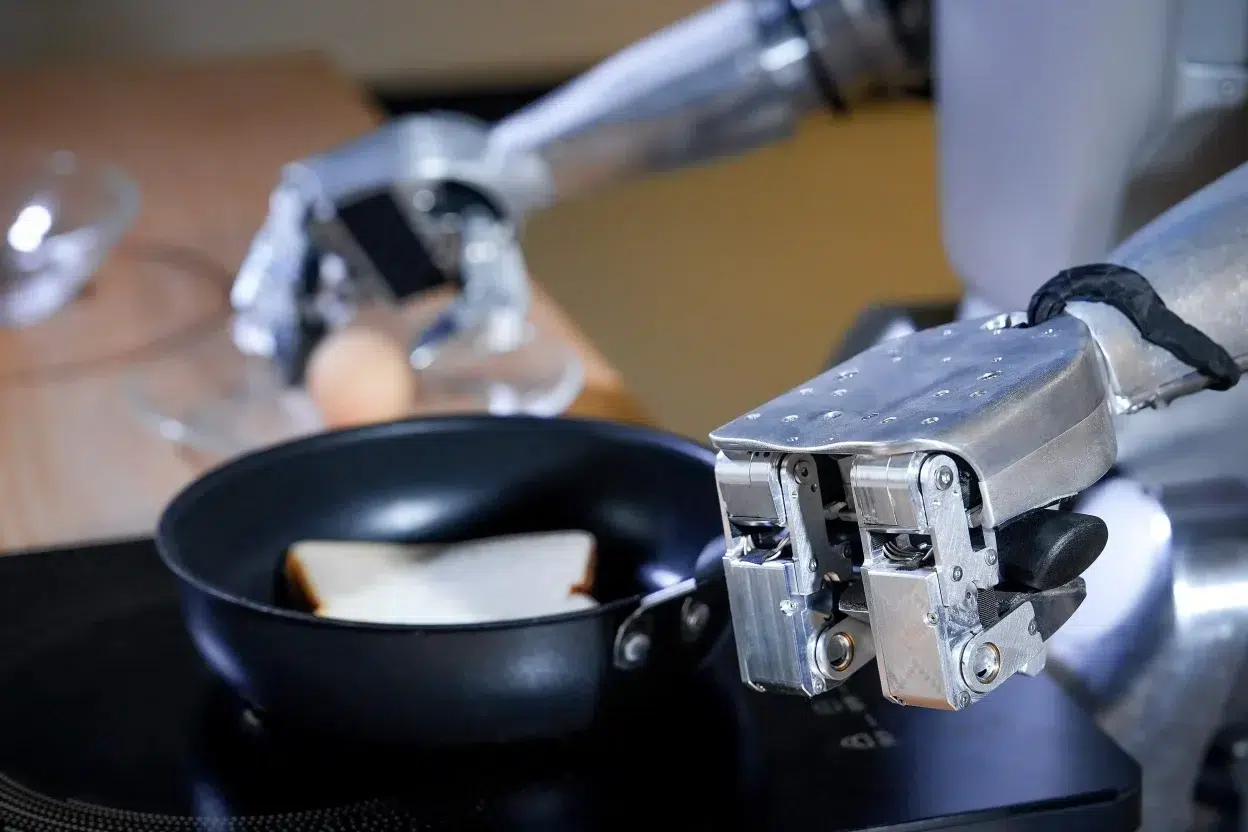
Collecting data on real machines is costly. According to figures reported by 36Kr, one hour of teleoperating a real robot costs around 500 to 1,000 yuan in the market concerned.
To reduce this reliance on physical demonstrations, Apple reportedly opted to generate data through simulation. The setup described relies on around 300 hours of synthetic training data, produced in 1,000 virtual home environments, using infrastructure made up of 250 NVIDIA H100 GPUs.
These environments include living rooms, offices and bedrooms. The layout of furniture and interior items varies so that the system is exposed to different spatial configurations.
The simulations also add visual alterations: blur, image noise, changes in brightness and shifts in colour temperature. The aim is to prepare the models for the visual disturbances likely to occur in real homes.
How HALO’s three-level AI architecture runs on the Mac mini
Running offline imposes a significant constraint: the computing needed to perceive the environment and control movement has to run locally on the onboard Mac mini.
To organise this processing, Apple reportedly designed a three-level architecture in which models of different sizes work together. The split is meant to avoid a single model handling instruction understanding, visual analysis and joint control all at once.
The top level is responsible for understanding the requested tasks. When an instruction involves moving a box, the vision-language model has to interpret the request using the images captured by the robot.
This structure separates the handling of instructions from the physical control of movement. It spreads the computing across several software components while keeping all of them running on the onboard computer.
Is HALO an Apple robot? It is still presented as a research project
The reported demonstration involves a Unitree G1 robot fitted with an experimental computing and software system. It shows the robot moving around, interacting with objects and running locally in an indoor environment.
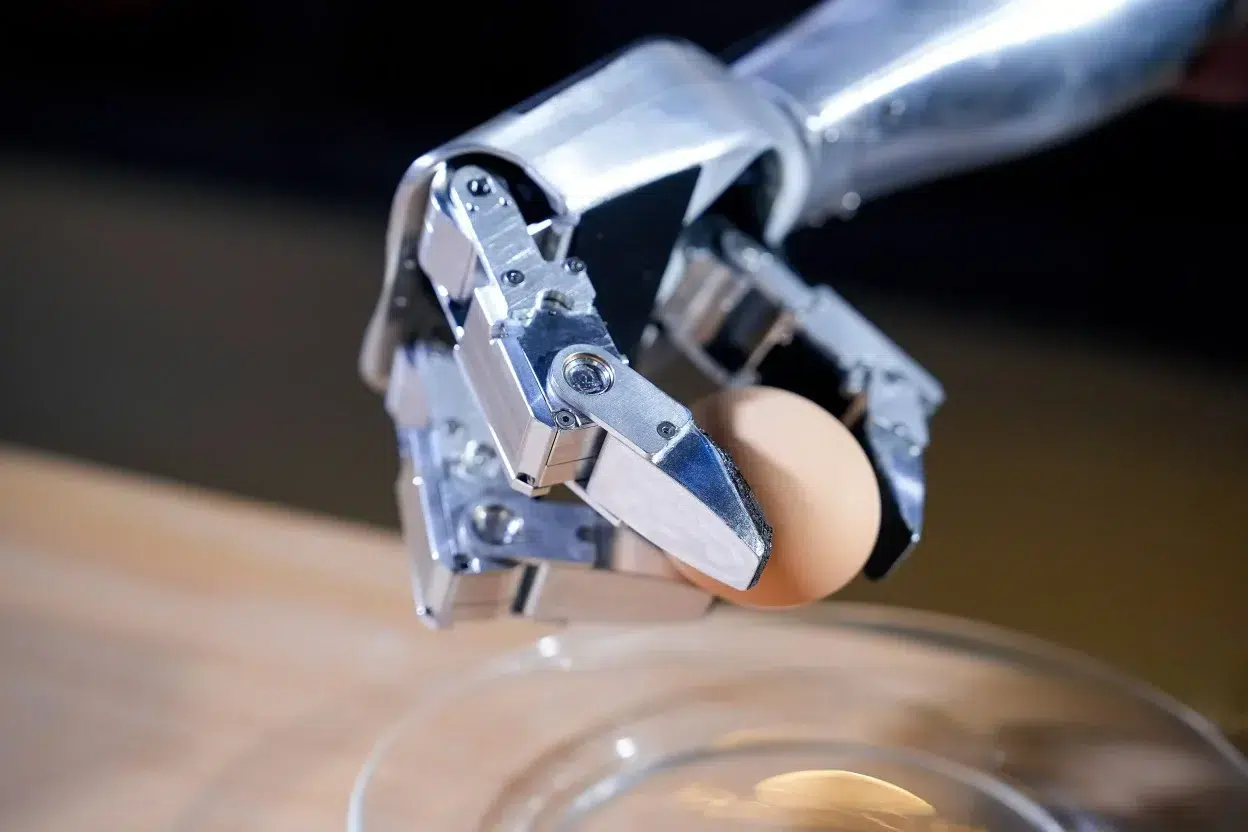
The project places particular emphasis on using synthetic data to train the robot’s physical abilities. The virtual scenes are used to multiply the configurations encountered during training, while the Mac mini M4 Pro handles the processing required during the real-world demonstration.