Genki Robotics showed its humanoid robot in public for the first time on 12 November 2026, in front of Japanese Prime Minister Sanae Takaichi. The bipedal prototype, assembled only recently, is part of a project to develop robots that can walk and handle objects.
The young Tokyo-based company, founded by Android creator Andy Rubin, took part in a meeting held at the Kantei, the Japanese prime minister’s office. Its CEO Andy Rubin and its CTO Koichi Nishiwaki presented a prototype that serves as groundwork for Genki Robotics’ first production model, which is due to be built around the end of the year.
Genki Robotics humanoid prototype assembled in a few days
According to Genki Robotics’ account, as relayed by Sanae Takaichi, the robot’s last parts arrived on the Friday before the presentation. The teams assembled it over the weekend, and it took its first steps on the Monday.
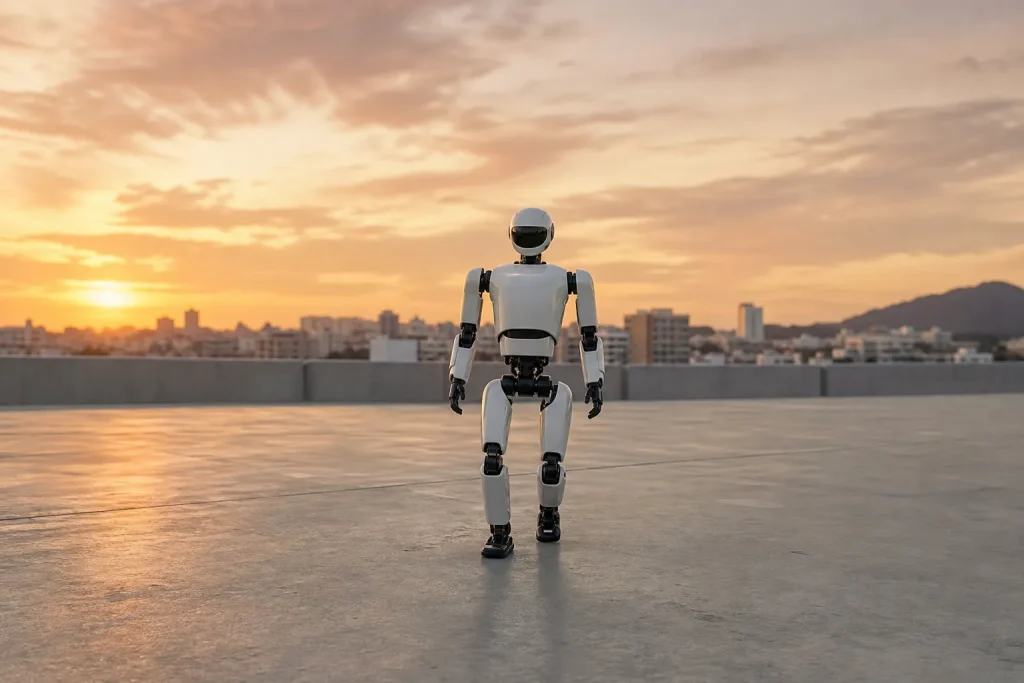
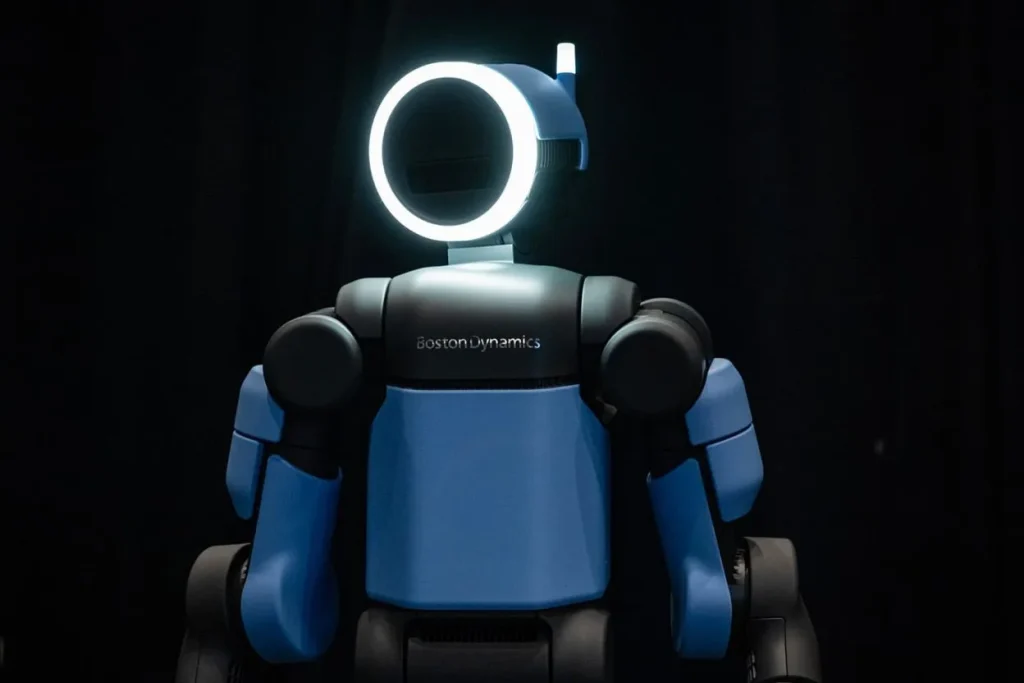
The robot on show is a human-sized bipedal humanoid with a grey and white shell, a head with a dark faceplate and green accents on the forearms. Its black hands have five fingers with green tips.
During the meeting, the prototype was held on a fixed stand. A nearby screen played footage of the robot walking in an empty room, in an office and on grass, as well as handling objects on a table.
What the humanoid robot is designed to do: walking, stairs and carrying objects
Genki Robotics is developing its humanoid to reproduce common human movements while keeping its balance. The company lists several target capabilities:
- Walking on flat ground.
- Going up and down stairs.
- Carrying out security patrols.
- Carrying objects.
These functions match the development goals announced by Genki Robotics.
Genki Robotics builds its own actuators and cameras
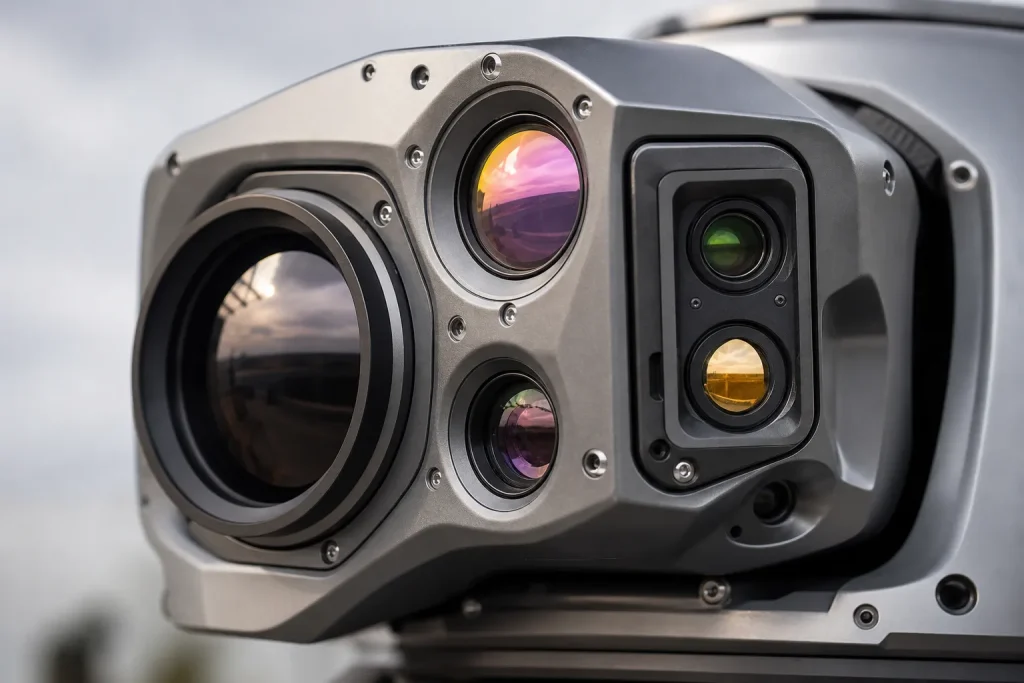
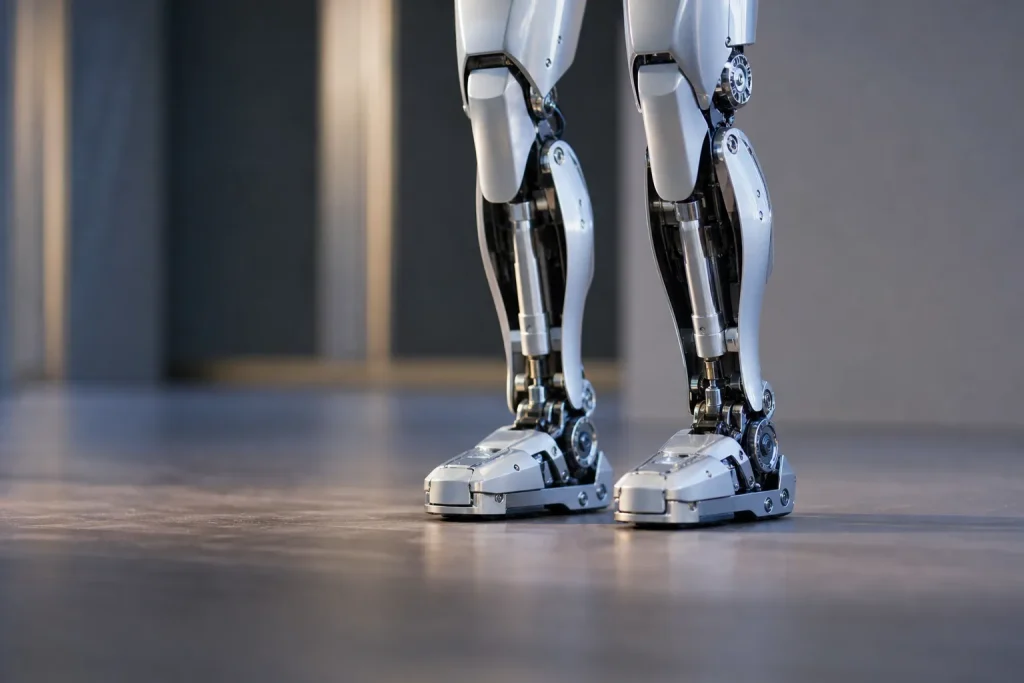
Genki Robotics says it designs the humanoid’s hardware components itself, from the joint mechanisms to the cameras.
Next to the robot, the company displayed four joint actuators of different sizes. These components drive the joints and produce the robot’s movements.
The manufacturer intends to draw on Japanese component technology, the country’s industrial capacity and its supply chains to grow its business internationally.
Genki Robotics also says it is in talks with Japanese telecom operators to connect its humanoid to the country’s mobile networks.
Who is behind Genki Robotics: Andy Rubin and Koichi Nishiwaki
The project brings together Andy Rubin, known for developing Android as an open operating system, and Koichi Nishiwaki, a specialist in humanoid locomotion.
Nishiwaki has worked on humanoid robot walking since the early 2000s. He earned a PhD in mechano-informatics from the University of Tokyo in 2002 and spent nearly ten years at Japan’s National Institute of Advanced Industrial Science and Technology (AIST).
He joined SCHAFT in 2013, shortly before Google, under Andy Rubin’s leadership, acquired the University of Tokyo spin-off. He then worked as a robotics engineer at Google until 2019, followed by Preferred Networks and Woven, a Toyota entity.
Genki Robotics aims to bring to humanoids the open-platform approach Andy Rubin developed with Android.
Japan’s physical AI strategy includes humanoid robots
Genki Robotics’ presentation took place at a meeting of the heads of six robot and component manufacturers. The meeting is part of Japan’s policy to develop physical artificial intelligence, which has been named one of the 17 strategic areas in the government’s growth plan.
The Japanese government is targeting a 30% share of the global market and a market worth 20 trillion yen, or about $130 billion, by 2040.
Sanae Takaichi asked the participants to develop physical AI at scale, through strategic cooperation between the public and private sectors.
She also instructed Minoru Kiuchi, minister in charge of economic and fiscal policy, to include support measures in the growth strategy expected at the end of the year.