General Motors plans to increase robotic automation in its North American plants by 20% by 2028. The carmaker is developing its own mobile robots in Indiana and extending its automation requirements to its suppliers.
US carmaker General Motors (GM) is speeding up the integration of robotics into its industrial facilities. According to Reuters, the strategy is meant to help control production costs at a time of rising labour expenses and expanding manufacturing activity in the United States. GM combines in-house machine development with purchases of robots and equipment from specialist suppliers.
Autonomous mobile robots built at GM’s Kokomo plant
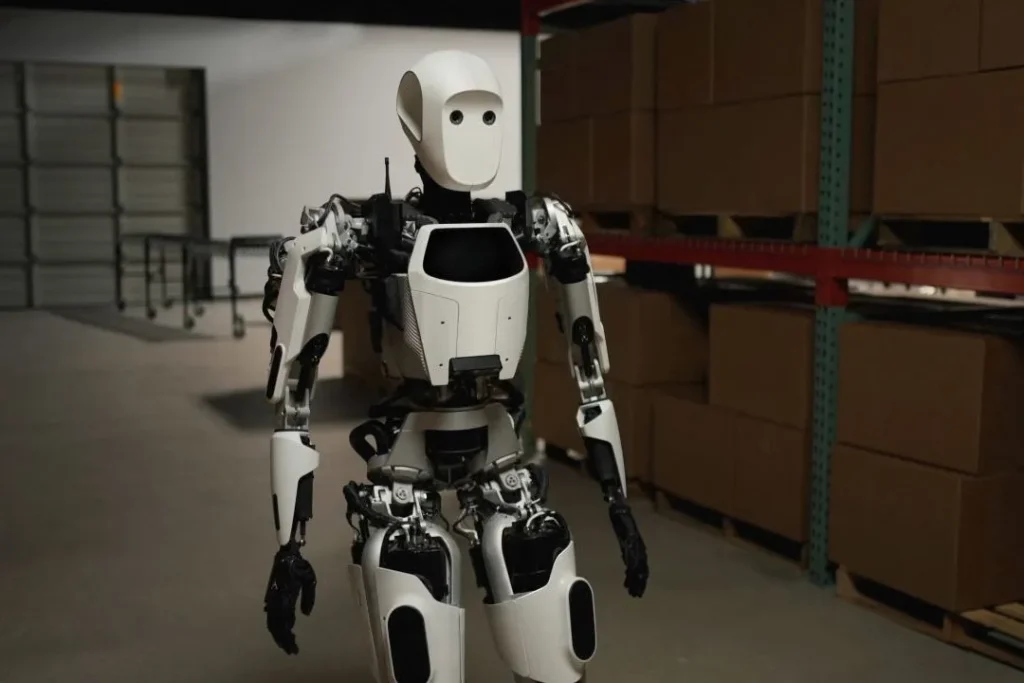
GM develops and assembles its own robots at its plant in Kokomo, Indiana. The carmaker is focusing in particular on autonomous mobile robots (AMRs), designed to move parts and materials within its production sites.
These machines are designed to automate part of the logistics movements between different areas of the plants. Their deployment is part of an industrial strategy that brings robotics into car manufacturing operations.
GM had also said that around 100 specialists, including robotics engineers, artificial intelligence engineers and hardware experts, were working on the development of advanced robotic systems.
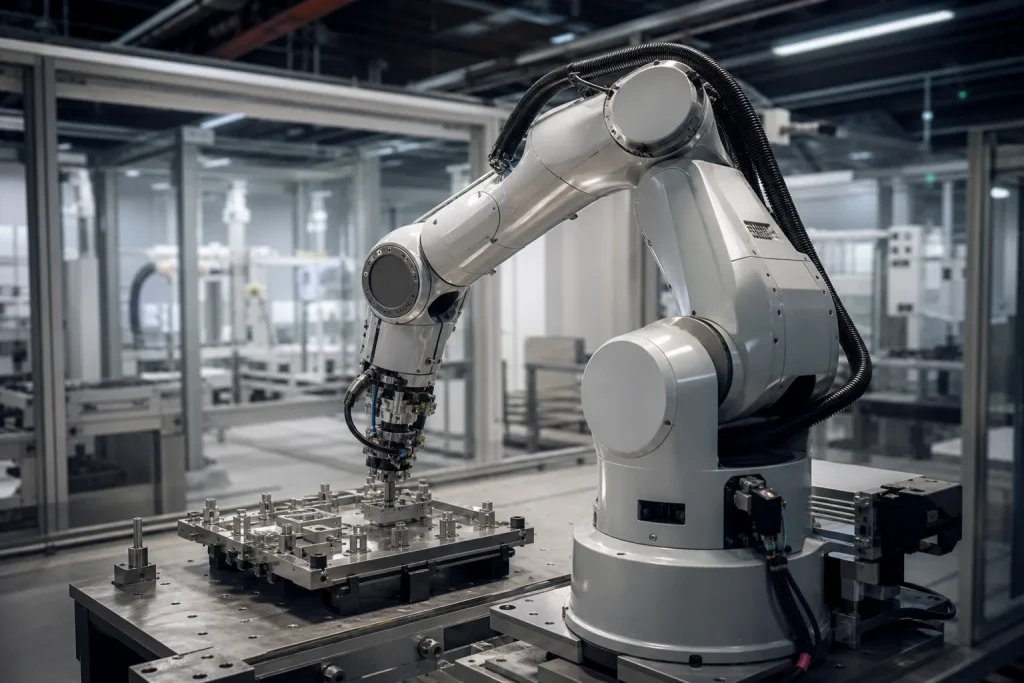
The programme covers industrial robots and automation equipment. The AMRs developed in Kokomo are presented as material transport machines, not as humanoid robots.
GM wants to rate its suppliers’ automation levels
General Motors’ robotics strategy reaches beyond the carmaker’s own facilities. The company now asks firms bidding on its new parts supply tenders to present their own industrial automation plans.
GM is also reportedly considering a scoring grid for its suppliers’ level of automation. This assessment could become one of the criteria used to award future contracts.
This approach could encourage automotive suppliers and component manufacturers to step up their investment in robotic systems to meet the carmaker’s expectations.
Rising labour costs drive GM’s robotics investment
The push for automation follows the collective agreement reached in 2023 with the United Auto Workers (UAW) union. At the time, GM estimated that the deal would add about $575 in labour costs per vehicle.
Automotive industry analysts were already expecting US carmakers to increase their spending on robotics to offset this rise in costs.
The reshoring of some manufacturing activity to the United States, encouraged by the Trump administration’s industrial policy, is also pushing production costs up. Raw material prices and the costs of reorganising supply chains add to this pressure.
According to Laurie Harbour, a partner at consulting firm Wipfli, automation aims in particular to reduce the number of labour hours needed to build vehicles. It can also help carmakers deal with hiring difficulties at their plants.
UAW fears job losses from GM’s automation push
This acceleration of automation is raising concerns among worker representatives. The UAW, which represents around 50,000 workers at GM plants, criticises a strategy that, according to the union, could lead to job cuts.
UAW president Shawn Fain has warned about the risks that the development of artificial intelligence and automation could pose to manufacturing jobs. He argued in particular that workers must be protected against uses of these technologies that would deprive them of the benefits of their labour.
UAW vice-president Ryan Hiestand believes that the efficiency gains General Motors is seeking could translate into fewer workers directly involved in production. He also criticises the use of more robots at a time when the carmaker is buying back its own shares.
GM says its automation strategy is not intended to replace workers. The carmaker presents robotics as a way to improve safety, quality and efficiency in industrial operations, by dividing tasks according to the respective capabilities of workers and machines.
This shift extends the long-standing use of robots in the car industry, particularly for body welding and moving materials. GM now wants to bring robotics and artificial intelligence into more operations across its North American plants.