Neura Robotics is partnering with Eon and EnviaM to develop humanoid robots that can assist technicians with electricity grid inspections. The first real-world trials are planned for 2027, after a training phase in Munich.
German manufacturer Neura Robotics and energy companies Eon and EnviaM have announced a joint project on the use of humanoid robots in electrical infrastructure. The aim is to ease the workload of skilled professionals, particularly in the face of staff shortages, by gradually handing certain inspection and monitoring tasks over to machines. The project is at the development and trial-preparation stage, not at the operational deployment stage.
Substation inspections and safety checks
The partners are mainly targeting inspections of technical installations, particularly transformer substations, along with monitoring work and the checks needed to keep them safe.
They also want to assess the use of humanoid robots for tasks that are physically demanding, repetitive or potentially dangerous. The stated goal is to assist technicians rather than replace their expertise.
Stephan Lowis, head of EnviaM, sees humanoid robots as a way to reduce some of the strain on employees. The knowledge of the professionals who work on the grid every day is to feed directly into training the machines.
Training at the TUM RoboGym in Munich before grid trials
The first stage of the project is due to take place at the TUM RoboGym, the training centre of the Technical University of Munich, located at the LabCampus at Munich Airport.
Qualified technicians will demonstrate the working procedures and the specific requirements of electrical infrastructure there. Their experience will be used to prepare the robots for situations they could encounter in the field.
The training is to combine several methods:
- Human demonstrations to pass on professional movements and procedures.
- Data from physical robots, whose movements and actions are recorded by sensors.
- Digital simulations that reproduce additional situations.
- Checks on real robots to assess the skills they have acquired.
After this preparation, Mitnetz Strom, the EnviaM subsidiary specialising in electricity networks, plans to test the applications under real operating conditions. According to the partners, the first practical trials are expected during 2027.
How the Neura 4NE1 humanoid robot could work in facilities designed for humans
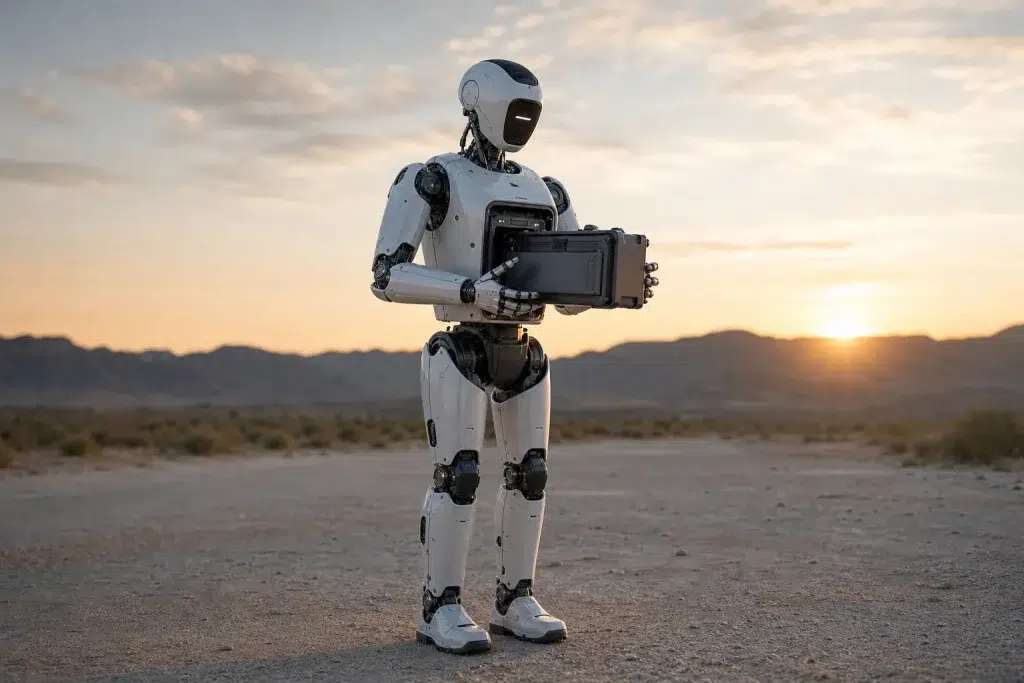
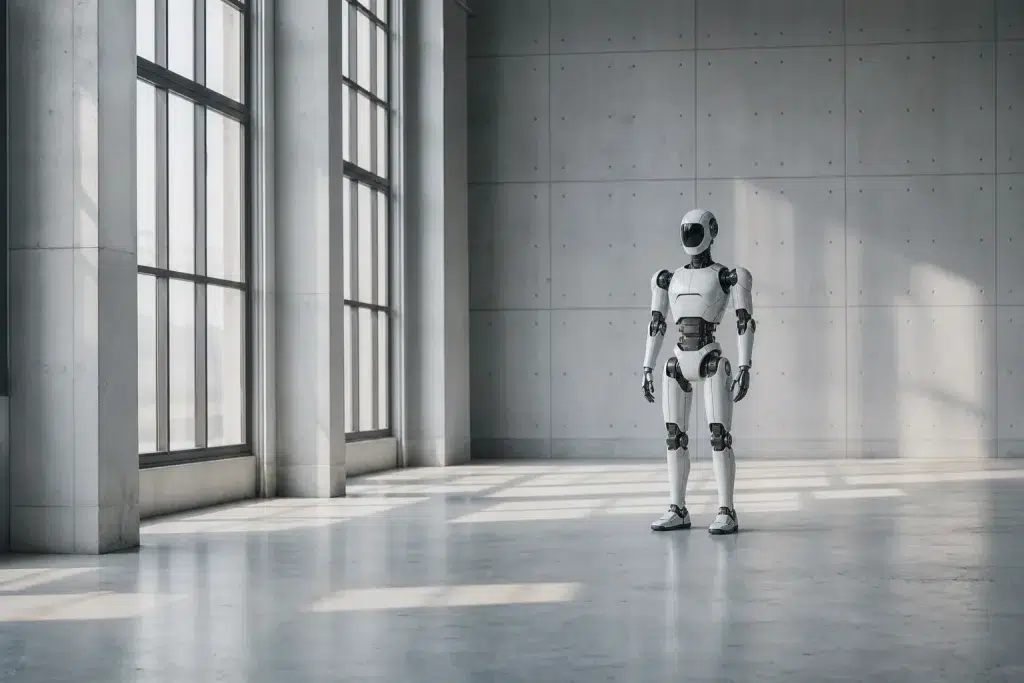
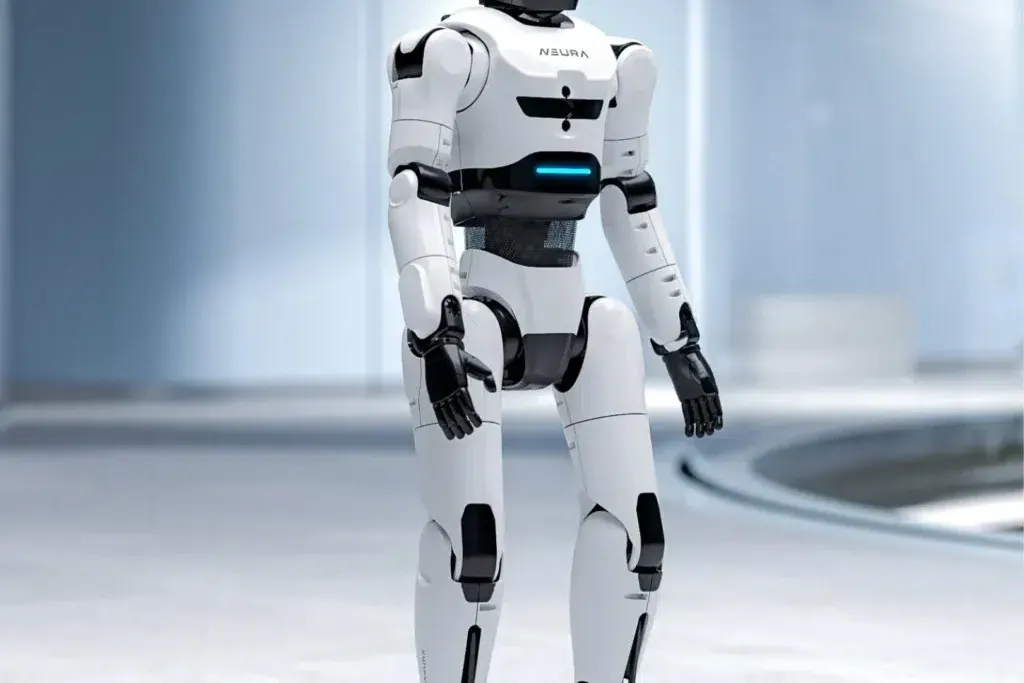
The humanoid robots under consideration include Neura Robotics’ 4NE1. According to the specifications provided by the companies, this model is 1.8 metres tall and weighs about 64 kilograms.
Its humanoid form is meant to let it move around spaces originally designed for technicians. The partners are considering tasks such as climbing stairs, going through doors and working at electrical cabinets.
The idea is to use existing infrastructure without having to modify it. These applications are, however, project goals: the 4NE1’s capabilities under the specific operating conditions of electricity grids still have to be evaluated during the announced trials.
Neuron AI: combining vision, sound and touch
To prepare for these tasks, Neura Robotics plans to use its Neuron AI artificial intelligence model. It is designed to process different types of information: images, sounds, tactile contact and applied forces.
This combination is intended to let the robots interpret their surroundings and learn procedures that involve physical interaction with equipment.
The skills developed during training could then be distributed through Neuraverse, Neura Robotics’ platform, so they can be reused at other suitable sites.
According to the partners, Eon and EnviaM will retain control of the data collected and of the skills acquired through training. This arrangement is meant to let the energy companies keep control of the operational knowledge passed on to the robots as part of the project.